





























ISLAMABAD (MNN); The federal government has announced that petroleum prices in Pakistan will now be reviewed and notified on a daily basis in response to fluctuations in international oil markets following the renewed conflict between the United States and Iran.
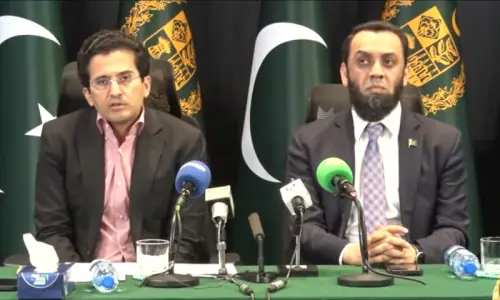
Addressing a joint press conference with Information Minister Attaullah Tarar on Friday, Petroleum Minister Ali Pervaiz Malik said the decision was taken by the federal cabinet under the directives of Prime Minister Shehbaz Sharif to ensure greater transparency in fuel pricing and enable timely adjustments in line with global market trends.
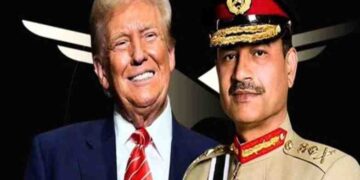
The minister thanked the people of Pakistan for their patience in bearing the economic impact of the ongoing regional conflict, noting that despite diplomatic efforts by Prime Minister Shehbaz Sharif, Chief of Defence Forces (CDF) and Chief of Army Staff Field Marshal Syed Asim Munir, tensions between the United States and Iran continue to escalate.
Ali Pervaiz Malik announced that the Oil and Gas Regulatory Authority (OGRA) has been entrusted with determining petroleum prices on a daily basis. Besides announcing the revised rates, OGRA will also publish the international benchmark prices and all relevant factors used in calculating fuel prices, allowing consumers to better understand the pricing mechanism.
He acknowledged that frequent adjustments could place an additional financial burden on consumers but said the move was necessary to ensure transparency and reflect actual changes in international oil prices without administrative delays.
The petroleum minister reiterated that the government remained committed to passing on the benefit of any decline in global oil prices to consumers. He recalled that when international crude prices had fallen previously, diesel prices had declined from around Rs520 to nearly Rs300 per litre, while petrol prices had also witnessed reductions of Rs70 to Rs80 per litre.
Referring to taxes on petroleum products, Malik said the petroleum levy and carbon support levy on petrol and diesel remain comparatively low, adding that the government is working to reduce reliance on indirect taxation while improving transparency in the energy sector.
He explained that daily fuel prices would be determined using the rolling seven-day average of international petroleum prices. The new mechanism, he said, represents another step towards deregulation, ensuring that domestic fuel prices are adjusted automatically in accordance with international market movements without requiring ministerial approval.
The minister also disclosed that Prime Minister Shehbaz Sharif had constituted a high-level committee under his leadership to formulate Pakistan’s long-term energy pricing and energy security framework. The committee has already held four meetings and is expected to finalise its recommendations within the next 15 to 20 days.
He said the committee was examining options to strengthen Pakistan’s energy security, including the establishment of strategic petroleum reserves to reduce dependence on imported fuel during international crises.
According to Malik, the government is also evaluating the country’s financial capacity to maintain strategic oil reserves and exploring opportunities to attract international energy traders and friendly countries to store petroleum products in Pakistan for regional supply.
The committee’s recommendations and policy framework will be presented before the federal cabinet next week for consideration.