






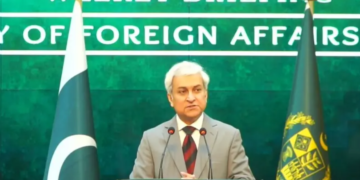

















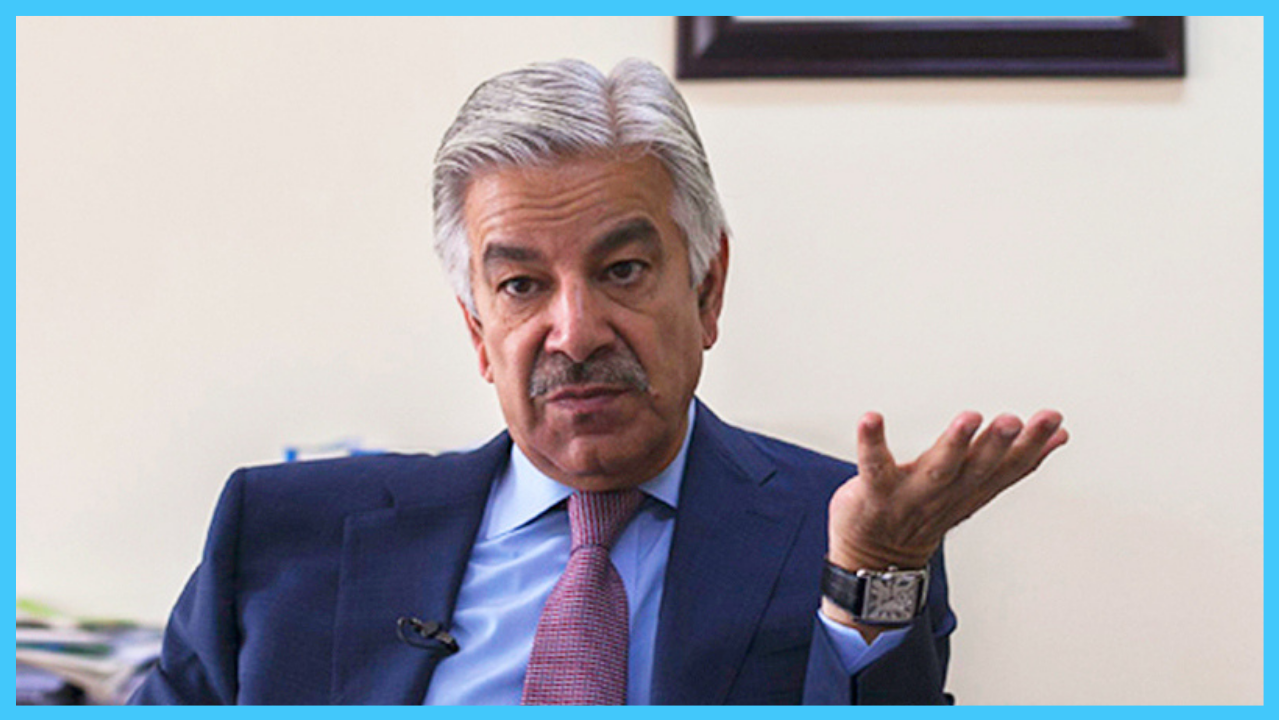
Web Desk; Defence Minister Khawaja Asif on Thursday hinted that the recently signed Pakistan-Saudi Arabia Strategic Mutual Defence Agreement could eventually expand to include other Arab states, saying “the doors are not closed” for such participation.
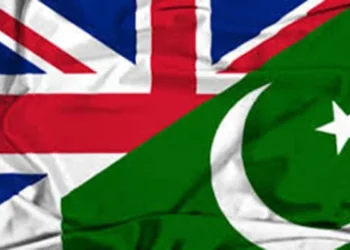
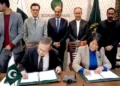
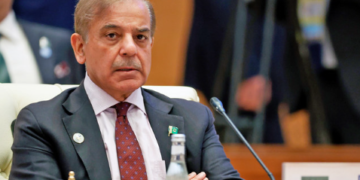
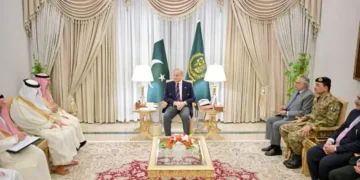
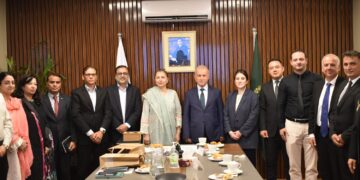
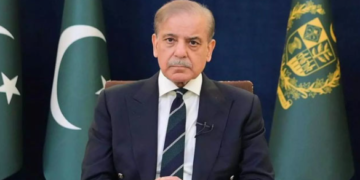
Speaking on Geo News programme Aaj Shahzeb Khanzada Kay Sath, the minister described the landmark pact, signed a day earlier in Riyadh by Prime Minister Shehbaz Sharif and Saudi Crown Prince Mohammed bin Salman, as a “historic step” that formally binds the two long-time allies to defend one another in case of aggression.
Under the agreement, any attack on either country will be treated as an attack on both. Khawaja Asif clarified that the accord is not limited to bilateral security; it is open-ended in nature and does not prevent the inclusion of other Arab states in the future. “I cannot say this prematurely, but I will definitely say the doors are not closed,” he remarked, drawing a parallel to NATO-style collective defence arrangements.
Not an Aggressive but Defensive Pact
Asif emphasised that the pact is not an “aggressive alliance” but a defensive mechanism intended to strengthen deterrence. “This is a defensive umbrella, not a tool for conquest or expansion. If there is aggression against Saudi Arabia or Pakistan, both countries will respond jointly,” he said.
The minister added that the deal was essentially an institutionalisation of long-standing security cooperation between the two states. For decades, Pakistani military and air force contingents have been stationed in the Kingdom, and Islamabad has played a key role in training Saudi forces. “That relationship has now been defined more clearly and translated into a formal defence pact,” he explained.
Pakistan’s Nuclear Assets and Responsibilities
Responding to a question about Pakistan’s nuclear capabilities under the agreement, Asif stressed that the country’s full defensive capabilities are available if required. However, he was quick to underline Pakistan’s responsible track record as a nuclear power. “Since we became a nuclear state, no one has ever questioned our responsible conduct. We have always opened our facilities for international inspection. In contrast, Israel has never allowed inspection of its facilities,” he pointed out.
Regional Context and Security Concerns
The minister avoided naming any specific country against which the pact is targeted, but said it provides a broad umbrella to counter “any aggression from any side.” Importantly, he noted that protecting Islam’s holy sites in Saudi Arabia is a “sacred duty” for Pakistan.
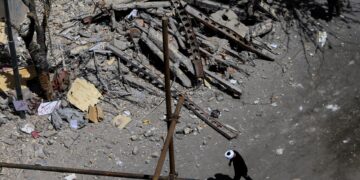
The deal comes at a sensitive time in regional geopolitics. Just days ago, Israel carried out strikes in Qatar targeting Hamas leaders, raising concerns across the Arab world about collective security. The timing of the Pakistan-Saudi pact, analysts say, is closely tied to these developments and represents an effort by the two nations to anchor regional defence.
Khawaja Asif also accused Afghanistan of enabling terrorist attacks inside Pakistan. Referring to the Soviet-Afghan war in the 1980s and the US-led war after 2001, he said Pakistan is still paying the price for being “dragged into two wars” that left a legacy of militancy. “Afghanistan is not innocent in this. I say clearly: it is a hostile country. Through groups like the TTP and BLA, we are being blackmailed,” he said.
“Doors Open” for Arab States
Asked if Arab states could collectively respond under the pact to threats from groups operating out of Afghanistan, the minister welcomed the idea, saying Pakistan has no objection if others join. “I will not be against it. But we must also acknowledge how many times we have already been there. Some of these actors even meddle in our politics, and one party here openly advocates for them despite their role in shedding Pakistani blood,” he stated.
The minister reiterated his long-held view that Muslim nations need a joint defence framework to secure their populations, stressing that Pakistan will also consider similar arrangements with other states.
Historical Depth of Ties
The Pakistan-Saudi defence relationship is not new. Cooperation dates back to 1967, and in 1979 Pakistani special forces assisted Saudi troops in regaining control of Masjid al-Haram during the Grand Mosque seizure. In 1982, a bilateral security cooperation agreement allowed Pakistani training, advisory support and deployments on Saudi soil. At times, up to 20,000 Pakistani troops were stationed in the Kingdom, and Riyadh became one of the largest buyers of Pakistani-made arms.
More recently, joint military cooperation meetings in Riyadh have reaffirmed commitments to expand training, exchanges, and shared operational planning. The new pact formalises these commitments, creating what some observers view as a de facto joint defensive umbrella.
Strategic and Economic Implications
For Pakistan, the agreement offers both strategic reassurance and economic dividends. By strengthening ties with Riyadh at a time of fiscal strain, Islamabad secures prospects of Saudi investment and funding across multiple sectors. It also enhances Pakistan’s standing as a pan-Islamic security provider.
For Saudi Arabia, the deal bolsters defences against Iran, Houthi militias, and the regional turbulence stemming from Israel’s actions in Gaza and beyond. The Israeli strike on Hamas officials in Doha added urgency to an agreement that had been under discussion for some time.
Importantly, the joint statement released after PM Shehbaz Sharif’s visit underlined that the pact is rooted in a “shared commitment to enhance security and achieve peace in the region and the world.” It stressed that “any aggression against either country shall be considered aggression against both,” while leaving room for expansion and flexibility.
The Most Consequential Defence Pact in Decades
The agreement marks the most significant formal upgrade in Pakistan-Saudi defence relations in decades, even surpassing the Cold War-era pacts Islamabad signed with the US under Seato and Cento, which have long since eroded. Unlike Pakistan’s current partnerships with China, Turkiye, and other Gulf states, this pact carries binding mutual defence clauses.
Against the backdrop of shifting alliances and escalating threats in the Middle East, Wednesday’s signing represents Islamabad’s most consequential defence commitment in decades, tying its security role firmly to the evolving Gulf strategic architecture.