

























































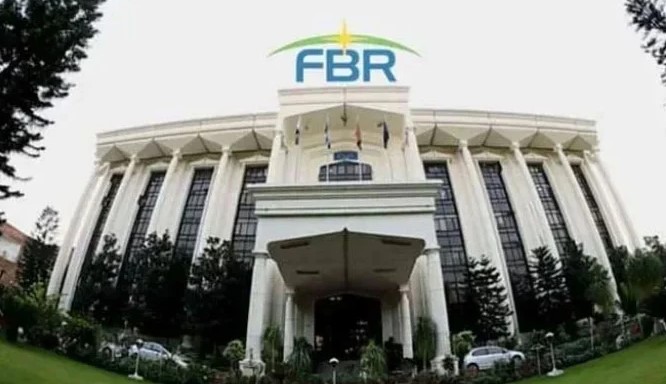
ISLAMABAD (MNN); The Federal Board of Revenue (FBR) has formulated a comprehensive strategy centred on Artificial Intelligence (AI), digital enforcement and improved tax compliance to achieve an ambitious tax collection target of Rs15.264 trillion for the fiscal year 2026-27.
According to a report by journalist Mehtab Haider published in an English daily, the FBR plans to significantly enhance revenue collection through AI-powered monitoring and a new digital Algorithmic Settlement Mechanism, despite extending tax relief to several sectors, including the salaried class, exporters and the real estate industry.
FBR Chairman Rashid Mahmood Langrial said the tax authority would conduct monthly scrutiny of General Sales Tax (GST) returns through digital systems, enabling quicker detection of irregularities and improving overall tax compliance.
He said macroeconomic indicators such as GDP growth, particularly the performance of the Large-Scale Manufacturing (LSM) sector, and inflation measured through the Consumer Price Index (CPI) would play a key role in determining whether the revenue target could be achieved.
The government has informed both the International Monetary Fund (IMF) and Parliament that a total of 26 revenue-enhancing measures—including improved enforcement, stronger compliance, policy reforms and selected tax rate adjustments—are expected to generate an additional Rs1.02 trillion during the next fiscal year.
The FBR’s collection target for the outgoing fiscal year has been revised downward to Rs12.983 trillion by the end of June 2026. The original target approved by Parliament was Rs14.13 trillion, which was subsequently reduced to Rs13.979 trillion before being further revised to Rs12.983 trillion. Under the IMF programme, the agreed collection target for the current fiscal year stands at Rs12.961 trillion.
Responding to concerns over the current year’s revenue shortfall, Chairman Langrial said the government had deliberately reduced the tax burden on selected sectors under commitments made with the IMF, while simultaneously preparing a digital transformation plan that would enable the FBR to achieve next year’s higher target through improved enforcement rather than imposing excessive new taxes.
He said the necessary digital infrastructure had already been established and would now be fully utilised through AI-driven algorithms to maximise both income tax and sales tax collection.
A key feature of the new strategy is the introduction of the Algorithmic Settlement Mechanism, which will allow taxpayers to resolve tax disputes digitally before final assessment orders are issued.
Under the proposed system, the FBR’s digital platform will automatically generate settlement offers based on predefined criteria, including the stage of the tax proceedings, the taxpayer’s compliance history, the nature of the dispute and other relevant factors determined by the Board.
Taxpayers wishing to accept the settlement will be required to respond through the IRIS portal within 10 days and pay the prescribed amount. Once payment is made, the disputed issue covered under the notice or audit report will be considered settled.
However, the settlement will apply only to the specific tax issue under consideration and will not prevent the FBR from initiating proceedings on other matters or different tax periods.
The FBR believes that greater use of artificial intelligence, digital audits and automated compliance systems will reduce litigation, improve transparency and significantly enhance revenue collection during the 2026-27 fiscal year.