


















































ISLAMABAD (MNN); The Lawyers Action Committee (LAC) on Saturday rejected the Judicial Commission of Pakistan’s (JCP) process for appointing judges to the country’s high courts, terming it a “horse-trading exercise” and describing the current selection mechanism as deeply flawed.
In a resolution adopted during a meeting in Islamabad, the committee said the impact of the 26th and 27th Constitutional Amendments continued to undermine Pakistan’s justice system, adding that the present method of appointing high court judges had further damaged public confidence in the judiciary.
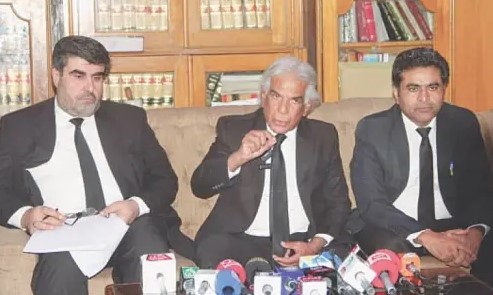
The LAC also unanimously nominated senior lawyer and former Supreme Court Bar Association president Ali Ahmed Kurd to lead a nationwide movement aimed at addressing what it called serious challenges facing the country’s judicial and constitutional framework.
Speaking to reporters outside the Supreme Court, Kurd said he had accepted the responsibility with a “heavy heart” at the insistence of fellow lawyers, noting that public trust in the justice system had significantly eroded. He was accompanied by prominent lawyers Hamid Khan, Salahuddin Ahmed and Abid Shahid Zuberi.
Recalling the 2007 Lawyers’ Movement against the removal of former Chief Justice Iftikhar Muhammad Chaudhry by then-president Pervez Musharraf, Kurd said the new campaign would also seek to mobilise public opinion, emphasizing that the people are the true stakeholders in Pakistan’s justice system.
He announced that the movement’s first public gathering would be held in Khyber Pakhtunkhwa, while another event is planned in London at the invitation of overseas Pakistanis to highlight concerns regarding the rule of law and judicial independence.
The committee urged members of the Judicial Commission who “still possess a conscience” to refrain from participating in what it called a politically motivated appointment process and to openly oppose what it described as an unfair selection mechanism.
According to the resolution, appointments to the high courts have become comparable to political nominations, alleging that judicial positions are increasingly awarded on the basis of political affiliations or financial influence rather than merit and professional competence.
The LAC warned that if judges continue to secure appointments through political manoeuvring instead of integrity and legal ability, the future of justice in Pakistan would face serious risks.
The committee also criticised the interview process for judicial appointments, describing it as a “mockery.” It alleged that interviews are conducted behind closed doors while several Judicial Commission members are excluded from the interview process, allowing allegedly unqualified candidates to be selected.
Expressing concern over the worsening security situation in Balochistan, the resolution condemned the continued loss of lives in terrorist attacks and called for a comprehensive review of policies affecting the province.
It argued that the pursuit of a “hard state” approach had alienated many communities, resulting in increased resentment and insecurity. The committee proposed the establishment of an independent fact-finding commission to identify local grievances, consult affected communities and recommend practical solutions.
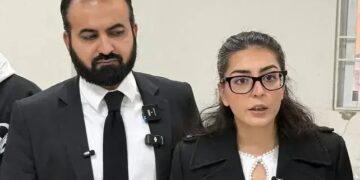
The Lawyers Action Committee also criticised the continued detention of lawyers Imaan Mazari and Hadi Ali Chattha, along with political figures including former Prime Minister Imran Khan, Dr Yasmin Rashid, Mahrang Baloch and Ali Wazir. It claimed these detentions reflected an inability to accommodate dissenting voices and criticised what it termed the silence of the judiciary, legal community and political parties over alleged injustices.
The resolution warned that the prevailing situation was unsustainable and could push the country toward a serious constitutional and political crisis if meaningful reforms were not undertaken.
The committee further condemned alleged attempts by the Pakistan Bar Council and provincial bar councils to interfere in bar association elections. It demanded that elections be conducted on schedule, in accordance with the law, and with Nadra verification to ensure transparency.
It also called for the removal of individuals holding fake law degrees or those simultaneously employed in other professions from the advocates’ rolls, while demanding a complete ban on voting by lawyers holding memberships in multiple bar associations.
The Lawyers Action Committee also expressed solidarity with the ongoing sit-in at Babarlo in Sindh over the disappearance of Priya Kumari and others. It urged the Sindh government to protect minority rights and address the legitimate concerns of affected communities.