







































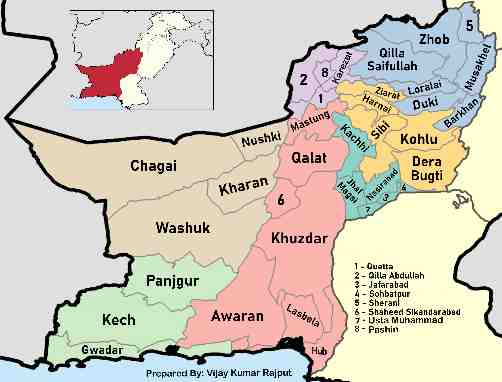
QUETTA (MNN); The Balochistan government has approved a major administrative reorganisation across the province, creating new divisions, districts, tehsils and sub-divisions, while redrawing the boundaries of several existing administrative units. One of the most significant changes is the division of Quetta district into East Quetta and West Quetta.
According to a notification issued by the Provincial Revenue Department on July 8, the administrative reforms have increased the number of divisions in Balochistan from 10 to 11, while the total number of districts has risen to 41.
Under the new arrangement, East Quetta will comprise the Saddar, City and Sariab sub-divisions, whereas West Quetta will include Kuchlak along with the newly established Brewery and Panjpai sub-divisions. A new Brewery Tehsil has also been created to improve local governance and administrative efficiency.
Another major change places Mastung district under Quetta Division after separating it from Kalat Division, expanding Quetta Division to three districts.
The move, however, has sparked criticism from tribal elders and political leaders of the Sarawan region. Senior politician Nawabzada Haji Lashkari Raisani opposed the transfer of Mastung, arguing that altering its historical administrative status violates the spirit of the 1948 accession agreement between the Khan of Kalat and Quaid-i-Azam Muhammad Ali Jinnah.
As part of the restructuring, Kalat Division has been dissolved and replaced by two new administrative divisions—Khuzdar Division and Lasbela Division. Khuzdar Division will comprise the districts of Khuzdar, Kalat, Surab and the newly created Wadh, while Lasbela Division will include Lasbela, Hub and Awaran districts.
The newly established Wadh District has been formed by separating Wadh, Ornach and Nal sub-divisions from Khuzdar District.
The government has also restored the name Surab District, reversing last year’s decision to rename it Shaheed Sikandarabad. Additionally, Zehri sub-division and tehsil have been shifted from Khuzdar to Surab District.
Several new administrative units have also been introduced across Khuzdar District, including Baghbana and Moola sub-divisions, Zeedi Tehsil, while Karkh has been upgraded from a sub-tehsil to a full tehsil. The Saroona sub-tehsil has been abolished after parts of its territory were merged into Lasbela District.
In another notable decision, the provincial government has officially revised the English spellings of Makran Division to Makuran and Sibi Division to Sevi.
Similarly, Upper Dera Bugti has been renamed North Dera Bugti, while Lower Dera Bugti will now be known as South Dera Bugti.
The reforms also include the establishment of new administrative units in several districts. New Ormara and Jiwani sub-divisions have been created in Gwadar District, Khanpur Tehsil has been added to Jaffarabad, while Jia Khan has been established as both a tehsil and sub-division in Sohbatpur.
In Zhob Division, Murgha Kibzai has been declared a new sub-division in Zhob District, while Mani Khawa has been created in Sherani District.
The notification further states that Kachhi District has been shifted from Naseerabad Division to Sevi Division, whereas Ziarat and Harnai districts have been moved from Sevi Division to Loralai Division.
Administrative boundaries of Pishin, Qila Abdullah and Chaman districts remain unchanged. However, Toba Kakari has been established as a new tehsil and sub-division in Barshore District, while Barshore sub-tehsil has been upgraded to a tehsil.
Additional changes include the upgradation of Chagai Tehsil to a sub-division in Chagai District, creation of Nag Sub-division in Washuk District, establishment of Zarkuwana Sub-division, Jandran Tehsil and Hosarhi Sub-tehsil in Kohlu District, and a new Rara Sham Sub-division in Barkhan District.
The provincial government says the administrative reforms are aimed at improving governance, public service delivery and development planning across Balochistan.