











































ISLAMABAD (MNN); An inquiry into the deadly fire that killed 14 newborns at the Pakistan Institute of Medical Sciences (PIMS) has found “systemic and institutional failure”, concluding that an electrical fault was the most probable cause of the blaze.
The 43-page report, prepared by a high-level inquiry committee headed by former interior secretary Shahid Khan, said the tragedy was not the result of a single failed safeguard. Instead, it developed from a chain of weaknesses involving fire detection, emergency preparedness, evacuation, maintenance, governance, regulation and follow-up of previously identified risks.
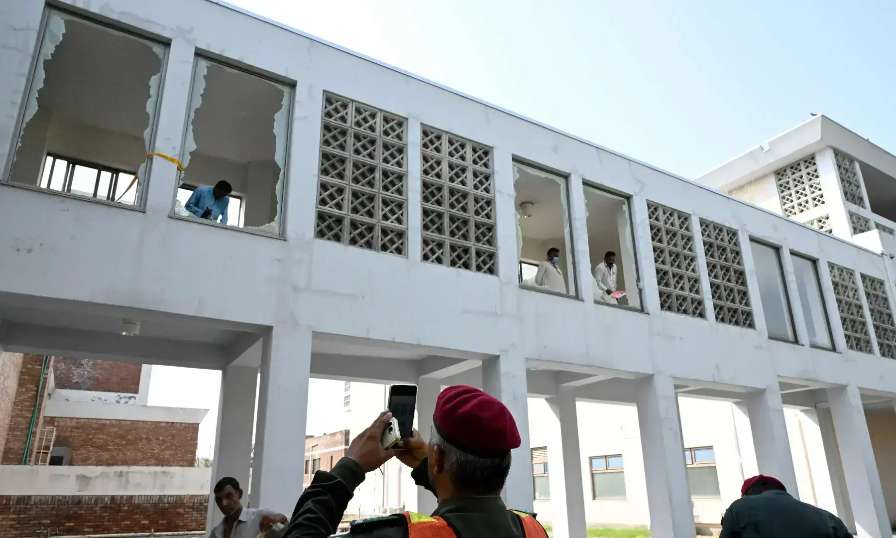
The August 26 fire broke out in the nursery of PIMS’s Mother and Child Hospital, killing 14 newborns. The incident triggered widespread concern over fire safety at the hospital and prompted demands for accountability. The government had ordered an inquiry immediately after the tragedy.
Electrical failure most probable source
According to the inquiry, the strongest technical evidence points to the electrical supply cable connected to AC Unit No. 2, near AC Unit No. 1, as the most probable point of ignition.
The report said abnormal localised electrical heating—potentially caused by excessive current, a high-resistance connection or another localised defect—most likely damaged insulation and ignited nearby combustible material.
However, the committee stressed that the precise defect and the individual or entity responsible for preventing it would require separate determination.
The inquiry found no evidence establishing arson, multiple ignition points, sabotage, an external IESCO fault, a pre-fire oxygen leak, or an incubator or warmer as the source of the blaze.
Known warnings were not properly addressed
One of the report’s most serious findings was that PIMS had a history of known but incompletely closed safety risks.
The committee referred to earlier warnings and records from the Capital Development Authority (CDA), findings of the Federal Ombudsman from 2015, PIMS’s own 2025 acknowledgement regarding ageing fire-safety infrastructure, and particularly a fire at the Nursing Hostel on July 6, 2026.
That earlier incident had already highlighted shortcomings involving fire detection and alarms, electrical inspection, evacuation arrangements, firefighting equipment, emergency drills and planning.
Despite these warnings, the report said, PIMS had not implemented a comprehensive, time-bound and independently verified corrective programme before the nursery fire.
The committee observed that while the specific AC defect might not have been foreseeable, the need for stronger fire preparedness was clearly foreseeable.
Nursery was overcrowded and inadequately prepared
The inquiry highlighted the vulnerability of the affected nursery, where 15 medically fragile, non-self-evacuating newborns were being accommodated in a 10-bed unit.
Several babies depended on oxygen or respiratory support. At the time of the emergency, only two doctors and two nurses were immediately available, while protected evacuation resources were limited.
The committee found that PIMS could not demonstrate an adequately documented, approved, trained and rehearsed nursery-specific fire and neonatal evacuation SOP.
It also found no evidence of a functional automatic smoke detection, alarm or sprinkler system serving the affected area. Combustible materials and the oxygen-supported environment further intensified the fire and smoke after ignition.
Frontline staff not blamed for abandoning newborns
The committee distinguished between the actions of frontline employees and the wider institutional response.
After examining CCTV footage, it said the evidence did not support a generalised allegation that frontline personnel abandoned the newborns.
Charge Nurse Nasreen Akhtar, Security Guard Maria Saleem and Staff Nurse Razia Noreen responded within moments, while several other staff members acted promptly and courageously as conditions rapidly became untenable.
The report said frontline personnel should not be blamed simply because the final outcome was catastrophic when their rescue efforts had been objectively established.
Emergency activation remained a major concern
According to the report, frontline staff reacted within seconds at around 6:38am, external notification was made at 6:54am, and operational emergency services arrived at approximately 7:01am.
The committee therefore said the principal concern was not necessarily the response of Capital Emergency Services (CES), but the period between the detection of the fire and external activation.
PIMS, the report concluded, had not demonstrated a tested incident-command system capable of immediately converting fire detection into an alarm, external notification, evacuation, hazard isolation, access control and coordinated rescue.
The committee also noted that CES had separately reported locked or obstructed routes, describing this as a serious institutional concern regarding emergency egress, although the specific adjoining door seen in CCTV was not established as a direct cause of the deaths.
Institutional responsibility
The report placed the principal institutional responsibility on PIMS and its senior management for failing to turn known risks, warnings and assigned responsibilities into an effective safety system.
It described the main failure as the absence of an integrated patient-safety system, with risks fragmented among clinical, engineering, security, administrative, contractor and regulatory functions.
As a result, the committee said, known deficiencies remained incompletely corrected, preparedness was weak and the emergency response became improvised.
The committee also questioned why the nursery continued operating in the old Mother and Child Hospital building despite the availability and progressive operationalisation of a new JICA-funded facility.
It said the decision was not supported by a sufficiently documented risk assessment, justification or time-bound transition plan and therefore constituted a prima facie management issue.
No criminal guilt established against named individual
The inquiry report said the available record did not presently establish criminal guilt against any named person.
However, it recommended focused investigation into four areas:
- Possible culpable electrical installation or maintenance failure involving AC Unit No. 2;
- Possible culpable obstruction of a mandatory emergency route;
- Failure to act despite specific prior warnings; and
- Any proven culpable delay in summoning external emergency assistance.
The committee said criminal responsibility must be assessed on the basis of the duty owed, knowledge or foreseeability of the risk, authority to act, the relevant omission or action, negligence, failed safeguards and causal contribution.
It also recommended administrative and disciplinary proceedings wherever evidence establishes negligence, inefficiency, misconduct, failure of supervision or non-performance of assigned safety responsibilities.
Responsibility extends beyond individual officials
The report said responsibility within the engineering, electrical and HVAC chain remained technically central but needed to be individualised.
Investigators said responsibility should ultimately be traced to those who designed, installed, altered, inspected, maintained, supervised or certified the electrical circuit implicated in the fire.
Regarding the Health Ministry, Islamabad Healthcare Regulatory Authority (IHRA), CDA and CES, the committee said responsibility was stronger at the institutional, supervisory and regulatory levels than in terms of person-specific criminal culpability.
The report described oversight as fragmented and said critical safety risks had not been sufficiently verified as closed.
Major safety reforms recommended
The inquiry committee recommended immediate fire, life-safety and electrical audits throughout PIMS, along with fully functional fire detection, alarm, suppression and evacuation systems.
It called for:
- A dedicated neonatal evacuation SOP;
- Realistic and regular emergency drills;
- Direct emergency notification procedures;
- A tested incident-command system;
- Preventive electrical safety and asset-management programmes;
- Professional and merit-based hospital governance;
- Stronger regulatory oversight; and
- A closed-loop compliance system for tracking every identified safety deficiency.
The committee stressed that a safety measure should not be considered implemented merely because it has been approved or is “under process”. It should only be regarded as implemented once the risk has been physically removed and independently verified.
It also recommended establishing a Family Support and Liaison Cell to provide psychological and bereavement support to affected families, ensure long-term clinical follow-up of the surviving newborn and facilitate any lawful compensation or relief.
The panel further proposed a permanent multidisciplinary Hospital Safety and Vigilance Committee and suggested consideration of an independent Safety and Governance Oversight Board to conduct audits, including unannounced inspections, and monitor implementation.
Finally, the committee recommended that high-risk services such as nurseries, NICUs, PICUs, ICUs, HDUs and operating theatres should operate only where minimum life-safety safeguards are physically functional and independently verified. It also called for critical services in legacy buildings to be shifted to appropriate purpose-built facilities wherever feasible.