



































NEW DELHI (MNN); Chinese President Xi Jinping has unveiled a series of initiatives in artificial intelligence, trade, investment and economic cooperation aimed at strengthening the role of the expanded BRICS grouping as a practical platform for development across the Global South.
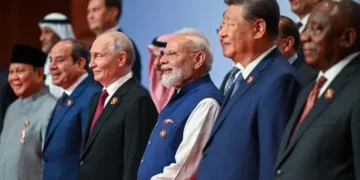
Addressing the BRICS leaders’ summit in New Delhi on Sunday, Xi said the success of the “Greater BRICS Initiative” depended on establishing a strong foundation for practical cooperation among member and partner countries.
He called for closer coordination in politics, security, economics and finance, while urging BRICS countries to maintain stable industrial and supply chains and work towards developing a more integrated market.
Xi announced that China would take the lead in establishing a BRICS AI Open Source Zone, designed to encourage cooperation on large language models, AI training and the development of an open artificial intelligence ecosystem.
He also proposed a BRICS Special Economic Zone partnership and announced that China would host a BRICS Service Trade Forum next year to promote trade and investment.
BRICS Expands Its Global Reach
BRICS, originally formed by Brazil, Russia, India, China and South Africa, has expanded significantly to include Iran, Indonesia, Egypt, Ethiopia and the United Arab Emirates.
The grouping also has 10 partner countries spanning Asia, Africa, Latin America and the Middle East, further increasing its reach across the Global South. China and Russia have referred to the expanded bloc as “Greater BRICS.”
Indian Prime Minister Narendra Modi said BRICS represented around 50 per cent of the world’s population, 40 per cent of global GDP and more than 25 per cent of global trade.
“The power of BRICS lies in our diversity and cooperation,” Modi said, calling for greater efforts to promote inclusive global growth.
Russian President Vladimir Putin described BRICS as a major force for the emergence of a new, fairer and multipolar world order. He urged members to combine the competitive strengths of their respective economies.
Modi also said solutions developed within BRICS should not remain confined to the grouping but should be adaptable and accessible to countries across the Global South.
BRICS Calls for Restraint in Middle East
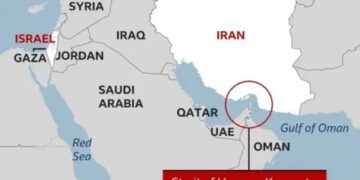
The summit also focused heavily on the escalating conflict in the Middle East.
After intensive diplomatic efforts by India, BRICS leaders on Saturday reached consensus on a joint declaration expressing deep concern over the continued escalation of tensions in the Middle East and calling for maximum restraint.
The agreement came after BRICS foreign ministers failed to reach consensus on a joint statement in New Delhi in May amid divisions over the conflict.
Iranian President Masoud Pezeshkian also held a high-level meeting with the Crown Prince of Abu Dhabi on the sidelines of the summit. The two sides discussed de-escalation, regional stability and efforts to promote peace and development.
The summit is taking place amid renewed fighting involving the United States and Iran, while Houthi attacks have further widened regional tensions.
Xi-Modi Meeting Signals Cautious Thaw
Xi’s participation in the summit also marked his first visit to India since 2019 and represented another step towards improving relations between the two nuclear-armed neighbours.
Relations deteriorated sharply after a deadly military clash along their disputed Himalayan border, but ties have gradually improved through restored flights, visas and high-level diplomatic contacts.
Meeting Modi, Xi said that despite differences between the two countries, China and India could complement each other’s strengths, support mutual development and advance together.
India’s Foreign Ministry said both leaders reaffirmed their commitment to finding a fair, reasonable and mutually acceptable solution to the boundary dispute.
However, significant mistrust remains, with territorial differences, a widening trade deficit and strategic rivalry continuing to complicate bilateral relations.
Xi also called for stronger financial cooperation, an equal and sustainable global order and an open and inclusive model of economic globalisation.
Meanwhile, dozens of Tibetans protested against Xi’s visit in New Delhi. Tibetan exiles have long opposed Chinese rule in Tibet, while the Dalai Lama has lived in India since fleeing Tibet in 1959.