








































ISLAMABAD (MNN); The opposition has agreed to initiate consultations for convening an All-Parties Conference (APC) to deliberate on major national issues, including the creation of new provinces, law and order, the economy, inflation and the rule of law.
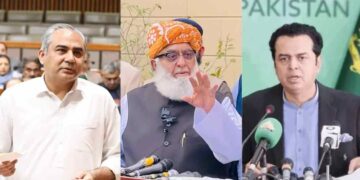
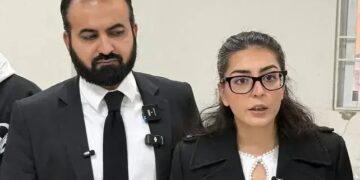
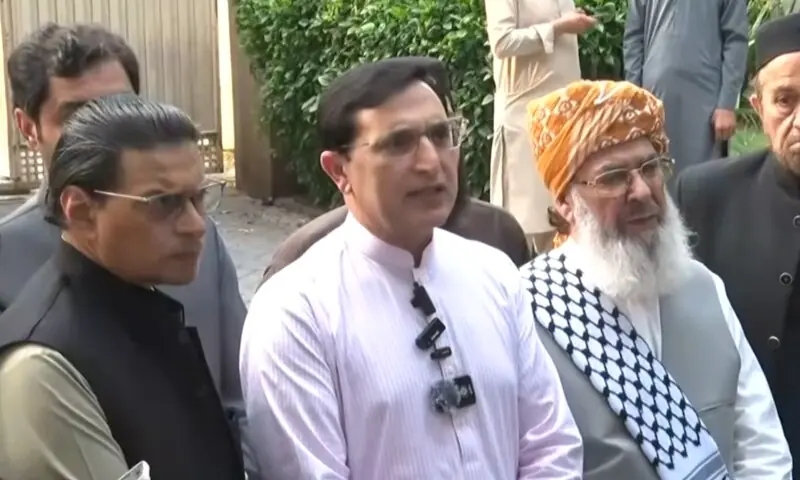
The decision was announced by PTI Chairman Barrister Gohar Ali Khan after a delegation-level meeting with JUI-F chief Maulana Fazlur Rehman at the latter’s residence on Friday.
Speaking to journalists, Gohar said the meeting marked the first formal engagement between the opposition parties on the formation of a joint opposition platform. He said the participants agreed to take all political parties into confidence on matters of national importance.
“The current law and order situation, the economy, inflation, lawlessness and the issue of creating new provinces require an all-parties conference,” Gohar said, adding that consultations would continue.
According to a declaration issued after the meeting, the participants discussed the proposed APC, PTI’s September 27 protest call, the supremacy of the Constitution, the rule of law and ways to strengthen the country’s constitutional and democratic system.
The meeting also stressed the need for mutual consultation and a joint political struggle to protect democratic principles and constitutional supremacy.
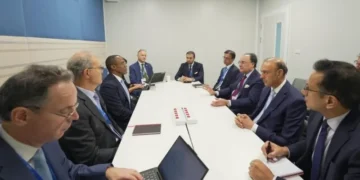
The PTI delegation was led by Barrister Gohar and included Salman Akram Raja, Asad Qaiser, Firdous Shamim Naqvi and Hussain Ahmad Yousafzai. JUI-F leaders Maulana Abdul Ghafoor Haideri and Maulana Asad Mahmood also attended.
JUI-F leader Maulana Abdul Ghafoor Haideri welcomed the opposition delegation, saying political parties would have to play a collective role in addressing the country’s challenges. He said the meeting covered the proposed APC, the question of new provinces and other national issues.
APC consultations to accelerate
Separately, Opposition Leader in the National Assembly Mehmood Khan Achakzai said that he and Senate Opposition Leader Raja Nasir Abbas had also met PTI leaders, including Gohar Ali Khan, and agreed that an APC should be convened at the earliest.
The opposition has scheduled a meeting for September 15 to review progress on preparations for the conference and decided to contact other political parties as soon as possible.
The opposition leaders also discussed PTI’s proposed September 27 march and protest.
Achakzai said consultations had also begun regarding a proposed meeting between the offices of the opposition leader and Prime Minister Shehbaz Sharif following a letter from the premier.
“Given the deteriorating situation in Pakistan, it has been decided that an All-Parties Conference will be convened at the earliest,” Achakzai said in a post on X.
Earlier, a meeting of opposition leaders was held in the chamber of Senate Opposition Leader Raja Nasir Abbas under Achakzai’s chairmanship, where the September 27 protest was also discussed.
Debate over new provinces intensifies
The latest development comes amid an expanding national debate over Pakistan’s administrative structure.
Interior Minister Mohsin Naqvi had earlier argued that the country’s governance system required fundamental reforms and advocated the creation of new administrative units with greater powers devolved to lower levels. He later said that any restructuring should reflect the wishes of the people.
On September 5, Naqvi said the creation of new administrative units should be based on public support, describing the situation as requiring a “system reset.” He clarified that a reset meant correcting shortcomings rather than dismantling the system.
The debate gained further momentum after Planning and Development Minister Ahsan Iqbal called for a national discussion on the administrative structure and floated the idea of creating 12 to 15 provinces.
The issue has also exposed differences among ruling coalition partners, particularly the Pakistan Peoples Party (PPP) and Pakistan Muslim League-Nawaz (PML-N), over the creation of new administrative units or provinces.
The opposition’s move for an APC follows earlier efforts by Tehreek Tahaffuz Ayeen-e-Pakistan (TTAP) and JUI-F to develop a “united opposition” and coordinate their political strategy.