






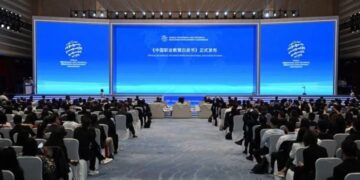


















ISLAMABAD (MNN); A joint sitting of Parliament on Thursday approved the federal government’s decision to impose emergency and governor’s rule in Khyber Pakhtunkhwa (KP), amid strong protests from opposition lawmakers, particularly members of the Pakistan Tehreek-e-Insaf (PTI).
The session was convened to consider separate resolutions on the emergency under Article 232 of the Constitution and governor’s rule under Article 234. The federal government defended the measures as necessary to address the security situation, while opposition members rejected the move and disputed allegations against the PTI-led provincial government.
The federal government announced the measures on October 11, citing what it described as the KP government’s “deliberate disengagement” from counterterrorism efforts. The decision followed weeks of political tensions and unsuccessful negotiations between the Centre and the PTI, which had announced a long march to Islamabad demanding the release of its incarcerated founder, Imran Khan.
Opposition lawmakers attended Thursday’s session carrying placards bearing slogans such as “Emergency is unacceptable.” Prime Minister Shehbaz Sharif attended part of the proceedings and exchanged greetings with opposition leaders.
Parliamentary Affairs Minister Tariq Fazal Chaudhry presented the proclamations and resolutions. After hours of debate, National Assembly Speaker Ayaz Sadiq put the resolutions to a vote, and both were approved.
At the beginning of the proceedings, a motion seeking suspension of certain provisions of the Parliament (Joint Sitting) Rules, 1973, was adopted by 214 votes to 56.
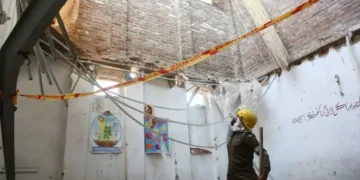
Law Minister Azam Nazeer Tarar explained the constitutional procedure for approving the resolutions, stating that both required a majority of the total membership. The joint sitting also offered prayers for the victims of a school roof collapse in Peshawar, which claimed 29 lives, including 28 students.
Naqvi says Centre had no option
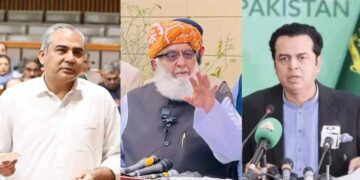
Interior Minister Mohsin Naqvi defended the decision, saying the federal government had exhausted other options before imposing emergency and governor’s rule.
Naqvi urged opposition lawmakers to stick to the facts and rejected claims that the government delegation had abruptly abandoned negotiations held on October 3.
He said the Centre had proposed imposing emergency in 12 districts of KP, claiming that PTI leader Asad Qaiser had been willing to sign an agreement but was advised to consult the provincial government first.
Naqvi also acknowledged that participants in the negotiations had expressed a clear commitment to fighting terrorism. However, he criticised KP Chief Minister Sohail Afridi, alleging that he had not accompanied security forces during operations and had cited political considerations.
The interior minister said the federal government had repeatedly sought cooperation with the provincial administration, including stronger police forces in five districts and a meeting of the provincial apex committee.
He stressed that terrorism could not be tackled through conflicting policies at the federal and provincial levels. He also urged the PTI to identify and address any shortcomings, adding that no political party should be accused of terrorism without justification.
PTI rejects allegations
PTI interim chairman Barrister Gohar Ali Khan described the country’s situation as fragile and condemned allegations that the party or the KP government was supporting terrorists.
He demanded an apology, arguing that such accusations conveyed a damaging message internationally about one of Pakistan’s federating units.
Gohar said the PTI had stood with the government and armed forces during the conflict with India. He rejected the imposition of emergency and maintained that his party would strengthen the country and eliminate terrorism if it returned to power.
He also disputed claims that PTI leaders had failed to attend funerals of security personnel killed in the line of duty. Gohar said his party remained willing to engage in dialogue if its demands were addressed.
Dar defends constitutional decision
Deputy Prime Minister and Foreign Minister Ishaq Dar described the federal government’s decision as difficult but constitutionally justified.
Recalling the response to the 2014 Army Public School attack in Peshawar, Dar referred to the National Action Plan and subsequent military operations, including Zarb-e-Azb and Radd-ul-Fasaad.
He alleged that certain individuals within the PTI had contributed to the resurgence of terrorism and questioned why the country continued to repeat past mistakes for political reasons.
Dar argued that counterterrorism should take precedence over political reconciliation and criticised the KP government’s handling of provincial affairs amid the deteriorating security situation.
He said Prime Minister Shehbaz Sharif had left the federal cabinet meeting on October 11 with the message that immediate action was necessary.
Achakzai calls for dialogue
National Assembly Opposition Leader Mehmood Khan Achakzai blamed what he described as faulty decisions by the country’s rulers for the prevailing situation.
He questioned the whereabouts of Sohail Afridi, who had reportedly been placed in preventive custody, and criticised the conduct of National Assembly Speaker Ayaz Sadiq.
Achakzai said the opposition was prepared to engage in dialogue on strengthening Parliament and eliminating terrorism, promising unconditional support if talks focused on these issues.
He also called for meetings between imprisoned PTI founder Imran Khan and his family, friends and party workers.
Senate Opposition Leader Allama Raja Nasir Abbas accused the government of undermining negotiations and argued that more time should have been allowed to reach an agreement. He urged political leaders to focus on public concerns rather than trading accusations.
PPP disputes account of failed talks
PPP Vice President Sherry Rehman challenged the PTI’s account of the October 3 negotiations, saying the government delegation had remained ready to continue discussions.
She said President Asif Ali Zardari and PPP Chairman Bilawal Bhutto-Zardari had consistently advocated dialogue but considered terrorism a red line.
Rehman maintained that the government delegation had not announced its departure and was prepared to continue talks into the early morning. She also cautioned that the PPP would not support any emergency measure that violated the Constitution.
National Assembly Speaker Ayaz Sadiq questioned the urgency of the PTI’s planned long march while negotiations were still underway.
JUI-F questions evidence
JUI-F Senator Kamran Murtaza argued that the government had not presented documentary evidence sufficient to justify governor’s rule in KP.
He said Article 234 required a report from the provincial governor explaining the need for such a measure, adding that Governor Faisal Karim Kundi had not presented the required justification before Parliament.
Murtaza also questioned why emergency measures had not been imposed in Balochistan despite serious security challenges there.
He maintained that free and transparent elections conducted by an impartial election commission offered the only sustainable solution to the country’s political problems.