


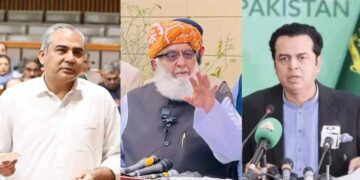



































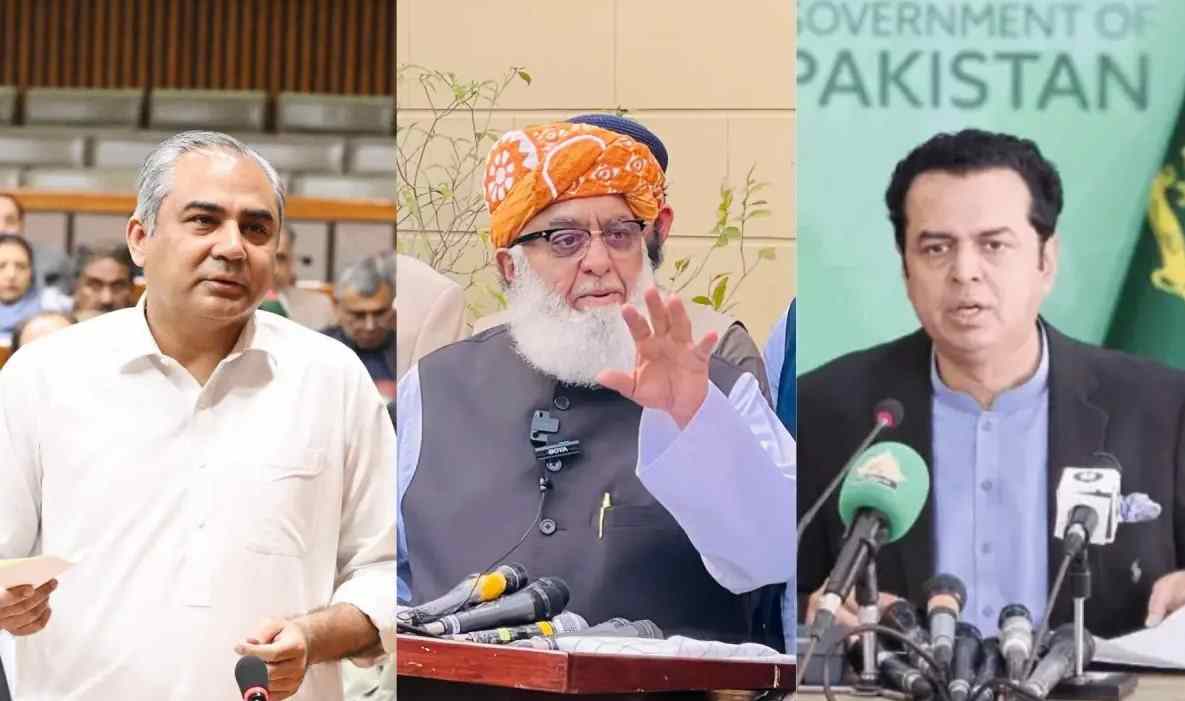
LAHORE/ISLAMABAD (MNN); Jamiat Ulema-i-Islam-Fazl (JUI-F) chief Maulana Fazlur Rehman on Saturday clarified that his party’s criticism of the country’s security policies was directed at government decisions rather than state institutions, describing allegations levelled against him by federal ministers as character assassination.
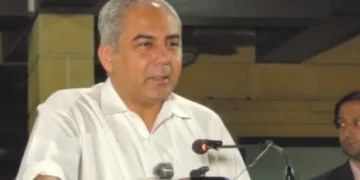
Addressing a press conference in Lahore, Fazl called for an in-camera session of Parliament to review the country’s security situation and develop a consensus-based strategy to combat terrorism.
He said his party wanted to understand why terrorism had not been eliminated despite years of counterterrorism operations and sacrifices. Instead of ridiculing politicians, the government should involve them in consultations to formulate an effective national policy, he added.
“If Parliament is supreme, why are decisions taken in Rawalpindi while Parliament is simply told to follow them?” Fazl asked, alleging that the government lacked the authority to make independent decisions.
He maintained that the public should be taken into confidence over counterterrorism measures, arguing that the government must explain its decisions rather than impose unilateral policies.
Fazl questions emergency rule in KP
The JUI-F chief reiterated his opposition to the imposition of emergency and governor’s rule in Khyber Pakhtunkhwa (KP), questioning why the province had been subjected to such measures when Balochistan was also facing serious terrorist violence.
Recalling his family’s opposition to emergency rule in Balochistan during the 1970s, Fazl said his father had resigned when the government of Zulfikar Ali Bhutto imposed emergency rule in the province.
He described the recurrence of such measures as unfortunate and urged the government to develop a shared national narrative and a collective counterterrorism strategy.
Fazl also questioned why the government had negotiated with Pakistan Tehreek-e-Insaf (PTI), which had governed KP, if the party was being accused of supporting terrorism. He noted that both sides had previously claimed to have reached a consensus on various points.
The JUI-F chief said approximately 250 of his party’s workers had lost their lives in terrorist violence, questioning how a party that had made such sacrifices could be accused of supporting terrorists.
He further argued that he was being singled out for criticism despite other political leaders having disagreed with military leadership at different times.
Interior minister alleges political motives
The controversy intensified after Interior Minister Mohsin Naqvi claimed on Friday, without naming Fazl, that a political party chief was extremely upset over being denied the governorship of KP and a role in the province’s new administrative arrangement.
Earlier on Saturday, State Minister for Interior Tallal Chaudhry criticised the JUI-F chief, alleging that he was seeking a political share in the province’s administration following the imposition of governor’s rule.
Chaudhry insisted that the emergency and governor’s rule were administrative measures aimed at combating terrorism rather than efforts to strengthen the ruling Pakistan Muslim League-Nawaz (PML-N) politically in KP.
He described the decision as a serious step taken after other options had been considered and rejected the suggestion that the arrangement was intended to distribute political positions or control the province’s natural resources.
The state minister also questioned Fazl’s remarks about the separation of East Pakistan in 1971 and said the JUI-F would command respect if it stood firmly by Pakistan’s interests.
Chaudhry offered to work with all stakeholders to implement the National Action Plan and combat terrorism. He also alleged links or mutual interests between the PTI and the Tehreek-i-Taliban Pakistan (TTP), citing what he described as the absence of terrorist attacks on PTI leaders and gatherings since 2015.
He further claimed that the TTP had nominated PTI founder Imran Khan for a committee during proposed peace talks in 2013 and alleged that Khan had allowed the group to open offices in Peshawar. These allegations were presented by the minister.
Khawaja Asif defends governor’s rule
Defence Minister Khawaja Asif also criticised Fazl while speaking to the media in Sialkot, accusing him of repeatedly targeting the country’s security forces.
Asif praised the sacrifices made by security personnel, officers and civilians in the fight against terrorism. Responding to allegations that governor’s rule had been imposed to gain control of KP’s mineral resources, he said he had shared details of individuals holding mining contracts in the province.
He maintained that the government had consulted the PTI and other opposition leaders before imposing emergency and governor’s rule, but the discussions had failed to produce an agreement.
Asif said the emergency could be withdrawn by Parliament if the security situation in the province improved sufficiently. He also pledged that free and fair elections would be held when the time came.
Meanwhile, KP Governor Faisal Karim Kundi defended the new administrative arrangement and criticised Fazl over his remarks concerning the province’s governance and the families of martyrs.
Political tensions following governor’s rule
Punjab Chief Minister Maryam Nawaz also criticised Fazl in a post on X, saying a senior politician should not support those accused of facilitating terrorism. Her remarks appeared to refer to the PTI, which the federal government has accused of supporting terrorist elements.
The federal government imposed governor’s rule and an emergency in KP on October 11, citing what it described as the provincial government’s deliberate disengagement from counterterrorism efforts.
The decision drew criticism from opposition figures, including Fazl, Mehmood Khan Achakzai and Raja Nasir Abbas of the Tehreek-i-Tahafuz-i-Ayin-i-Pakistan.
Political tensions between the federal government and the opposition had already been high amid PTI’s plans for a protest march to Islamabad seeking the release of its jailed founder, Imran Khan.
Negotiations between the government and the PTI had failed to produce a breakthrough in the days preceding the imposition of governor’s rule. Fazl had been viewed as a possible mediator capable of helping bridge the gap between the two sides.