



















LAHORE/ISLAMABAD (MNN); The fifth round of negotiations between the government and Jamaat-i-Islami (JI) ended without a breakthrough on Saturday, as the government asked the party to postpone its planned September 20 long march towards Islamabad, citing security concerns.
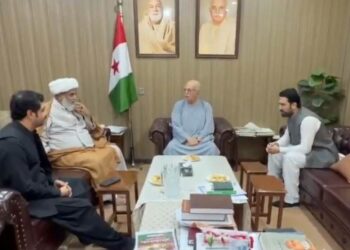
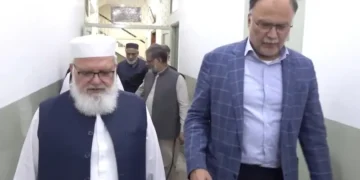
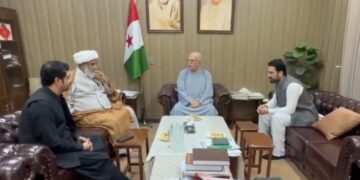
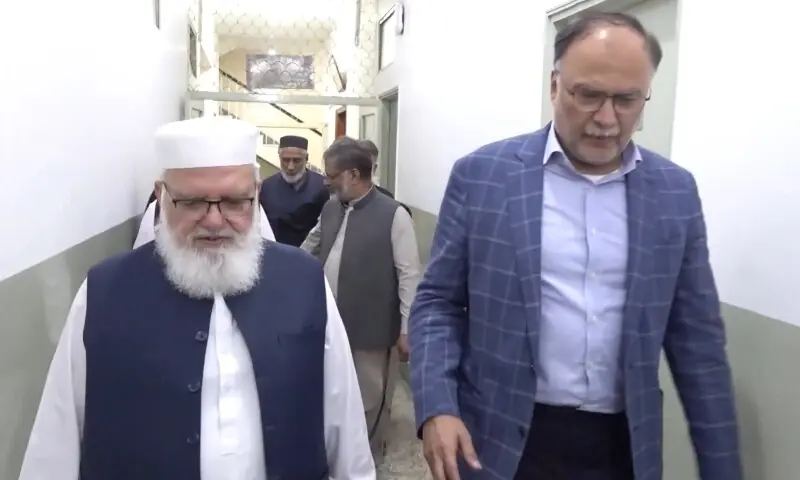
The government delegation comprised Federal Minister for Planning Ahsan Iqbal, Adviser to the Prime Minister Rana Sanaullah and Punjab Minister Khawaja Salman Rafique.
The JI team included Deputy Emir Liaquat Baloch, Acting Secretary General Nazir Ahmad Janjua, Special Assistant to the JI Emir Umair Idrees, JI Lahore Emir Ziauddin Ansari and Information Secretary Shakeel Ahmad Tarrabi.
During the meeting, the government requested that JI defer its planned long march in view of security threats.
Liaquat Baloch, however, maintained that the protest movement would continue until the petroleum levy imposed on consumers was withdrawn. The two sides consequently failed to reach an agreement on the march or the party’s central demand.
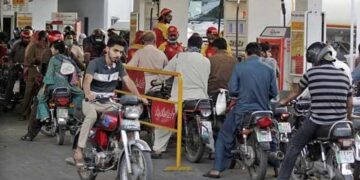
The government currently imposes taxes and duties amounting to Rs114 per litre on petrol and Rs100 per litre on diesel, according to the report. JI has been holding sit-ins in Lahore, Peshawar, Karachi and other cities since August 16 against the petroleum levy.
The government negotiating team assured JI that further relief for the public would be considered and also referred to pressure arising from Pakistan’s commitments to the International Monetary Fund (IMF).
Baloch said the government would have to take practical measures to address the party’s demands. He warned that, without concrete action, JI would proceed with its protest programme and Islamabad march.
According to the announced schedule, JI’s “Super Long March” is set to begin from Karachi and other parts of the country on Sunday, September 20, with caravans heading towards Islamabad.
JI insists there will be no retreat
Earlier, JI Emir Hafiz Naeemur Rehman said the party would not call off the march unless the government abolished the petroleum levy.
Addressing a press conference at Mansoora, Rehman said protest caravans from different parts of the country would begin moving towards the federal capital on Sunday. JI has described the campaign as a movement for public economic relief rather than one directed against a particular individual or political party.
Rehman said that if the government could not abolish the levy, JI could not withdraw its march.
He also called for a formal and concrete government proposal on the levy, saying the party had already rejected the government’s fuel relief package as insufficient.
Under the government’s announced relief scheme, eligible motorcycles, rickshaws, Qingqi rickshaws and cars of up to 800cc were to receive a subsidy of Rs100 per litre, subject to specified monthly limits. JI has maintained that such temporary relief does not replace its demand for abolition of the petroleum levy.
Rehman argued that relief to consumers should be treated as a public right and called for measures to reduce the broader economic burden associated with fuel prices.
He also criticised what he described as government corruption and excessive official expenditure, arguing that authorities should reduce their own spending rather than asking citizens to make further sacrifices.
The JI chief also raised questions about interest rates, the autonomy of the State Bank of Pakistan, official foreign travel and expenditure on government facilities.
JI raises broader economic demands
Rehman said the government had repeatedly asked the party to submit proposals during negotiations, while JI maintained that addressing public grievances was primarily the government’s responsibility.
He said the party had already presented proposals during earlier rounds of talks but that these had not resulted in an agreement.
The JI chief called for a reduction in interest rates and questioned the extent of government influence over appointments at the State Bank, arguing that such involvement raised questions about the central bank’s independence.
He also criticised the government’s reliance on IMF-related constraints in discussions about public relief while questioning official expenditure.
Rehman called on Punjab Chief Minister Maryam Nawaz to sell the official aircraft, which he claimed was worth Rs11 billion.
On agriculture and food prices, he alleged that powerful groups and cartels influenced government decisions concerning sugar and wheat imports and exports. He also argued that farmers were not receiving adequate prices for wheat and sugarcane, contributing to higher consumer prices.
The JI chief further criticised payments to independent power producers (IPPs), referring to capacity payments that he said amounted to Rs1.8 trillion, and questioned payments associated with regasification facilities amid what he described as gas shortages.
On Friday, Rehman claimed that JI’s proposed fiscal reforms could potentially save the national exchequer between Rs3 trillion and Rs4 trillion. That figure is a claim by the JI leadership and was not independently established in the supplied report.
Islamabad march plans
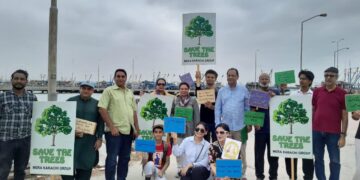
Rehman said JI’s protest campaign had continued for more than a month, with sit-ins and demonstrations being held in various parts of the country.
He said the party intended to proceed with the Islamabad mobilisation and that the number and locations of sit-ins were being adjusted as part of preparations for the march.
JI has announced that caravans will travel towards Islamabad from Karachi, Quetta, Chitral, Khyber Pakhtunkhwa, Punjab and other areas, with a Karachi contingent also travelling by train.
Rehman said JI supported the constitutional right of political parties, including PTI, to hold peaceful protests. He also called for authorities not to obstruct peaceful demonstrations through the placement of containers.
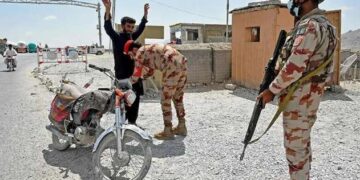
The government, meanwhile, has cited security concerns in asking JI to postpone its march.
The latest round of talks followed several earlier meetings between the two sides that failed to resolve the dispute over the petroleum levy. Negotiations began on September 7 after the government and JI agreed to discuss measures aimed at reducing the levy and providing relief to consumers.
With the fifth round also ending without an agreement, the government and JI remain divided over the petroleum levy, public relief measures and the timing of the planned Islamabad march.