





























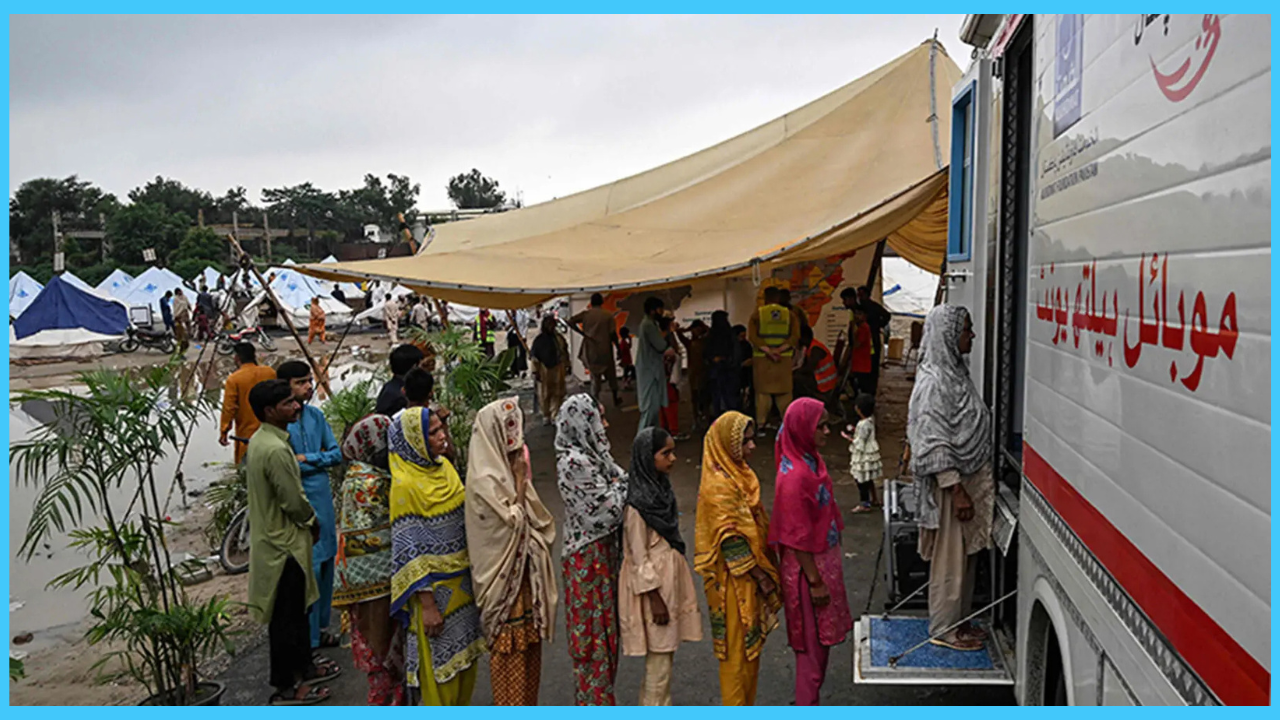
LAHORE; In a former classroom on the outskirts of Lahore, now converted into a makeshift relief camp, dozens of women sit in silence, their faces etched with fatigue and despair. The floods that swept through Punjab have left them homeless and uncertain about their future. Among them are expectant mothers, enduring pregnancy pains with little access to medical care, and young girls struggling with the stigma and scarcity of menstrual supplies.
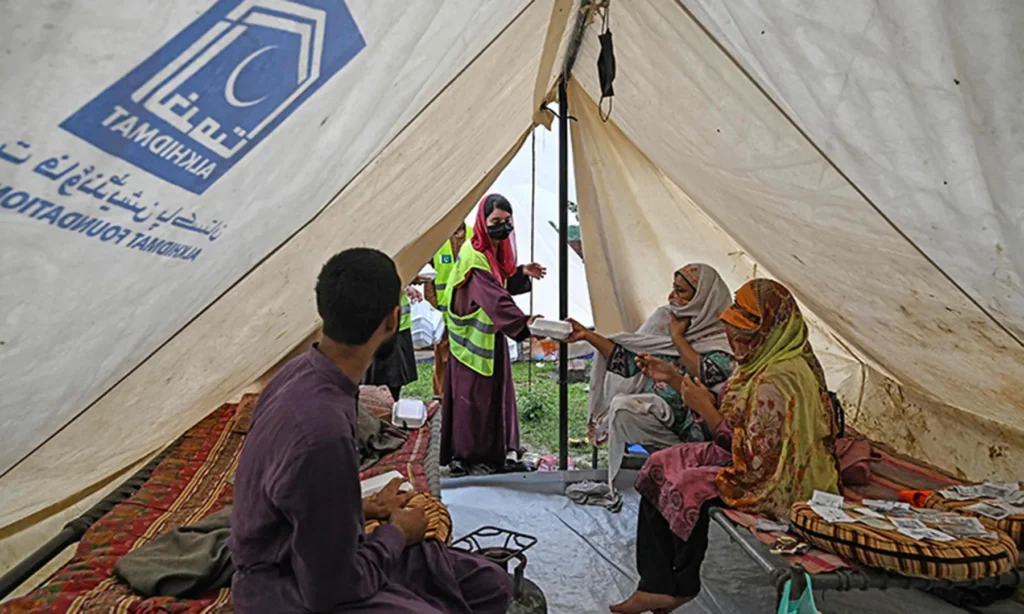
For 19-year-old Shumaila Riaz, who is seven months pregnant with her first child, the last few days have been particularly grueling. “I wanted to dream about the baby I’m about to have,” she said softly, “but now I am not even sure about my own survival.” She has been living in the camp for four days, experiencing cramps and weakness, with only minimal support.
Nearby, Fatima, another 19-year-old who is four months pregnant and caring for her one-year-old daughter, shared her frustrations. “I used to eat, sleep, and walk as I wished,” she said. “All that freedom is gone now. Here, my body hurts constantly, and I cannot get the medicines I need.”
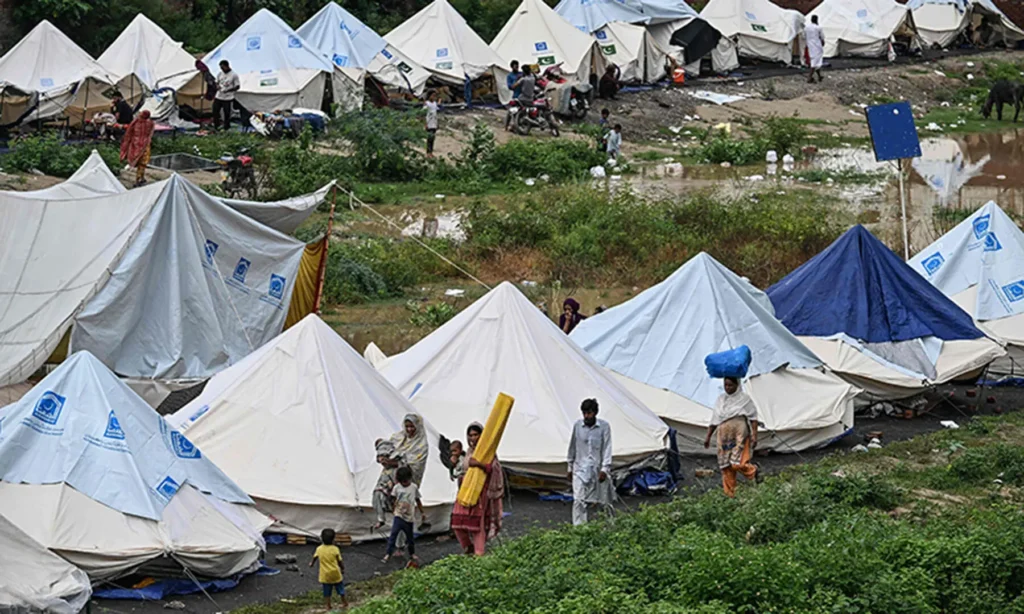
The school, now housing more than 2,000 displaced people, is overcrowded and surrounded by stagnant floodwater. Inside, women wear the same clothes for days, their hair unkempt, and their eyes swollen with exhaustion. Privacy is scarce, and essential health services are stretched thin.
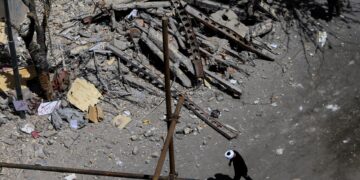
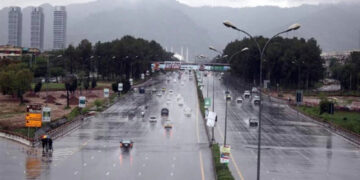
According to Punjab’s Senior Minister Marriyum Aurangzeb, more than two million people have been affected by the recent floods, with 750,000 evacuated. Of them, 115,000 were rescued by boat in what officials describe as Punjab’s largest-ever rescue operation. While rural areas near riverbanks have been worst hit, parts of Lahore have also been submerged after three major rivers swelled dangerously.
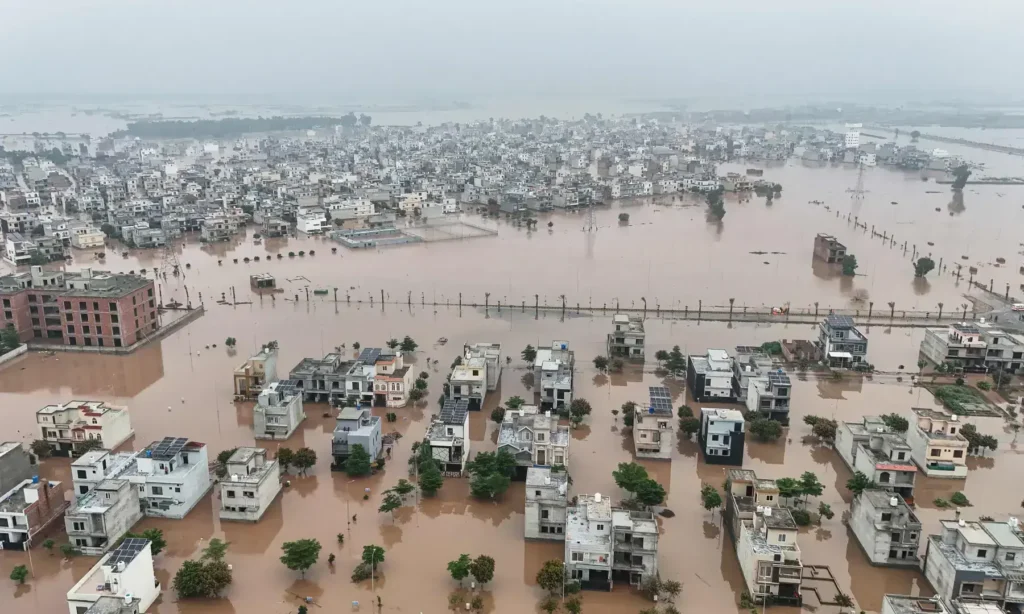
South Asia’s seasonal monsoons are a lifeline for agriculture, but climate change is making rainfall heavier and more unpredictable. Since June, floods and landslides triggered by torrential rains have killed more than 850 people across Pakistan. In Punjab alone, at least 32 lives have been lost in the latest wave of flooding.
For displaced women, however, survival extends beyond escaping rising waters. Menstruation remains a silent struggle. Aleema Bibi, 35, cradled her baby on a mud-stained sheet as she described the challenge. “We are desperate for sanitary pads. Even if we get them, there are no proper bathrooms,” she said. Like many others, she relies on neighbors’ homes to relieve herself in secrecy. Jameela, another flood victim, explained that she waits for men to leave before using improvised toilets near cowsheds.
At the camp’s small medical truck, doctors are overwhelmed. “I see around 200 to 300 patients daily with infections and water-borne diseases,” said Fahad Abbas, 27, who volunteers with a local NGO. “Many women and children are also suffering psychological trauma after losing everything.”
Doctors warn that pregnant women in such conditions are especially vulnerable. One anxious mother-in-law was seen pleading for help as her eight-months-pregnant daughter-in-law went into labor without proper facilities.
Even without floods, maternal and infant health in Pakistan remains fragile. According to the World Health Organization, 675 newborns under one month old and 27 women in perinatal stages die every day from preventable complications.
For women like Jameela, survival feels like a cruel test. “We escaped death,” she said bitterly, “but this misery is no less than death itself.”