





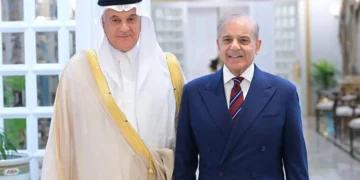






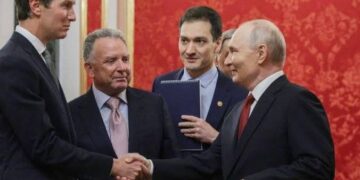




















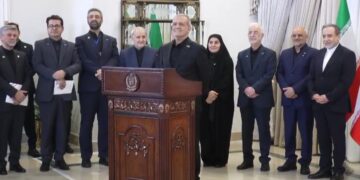





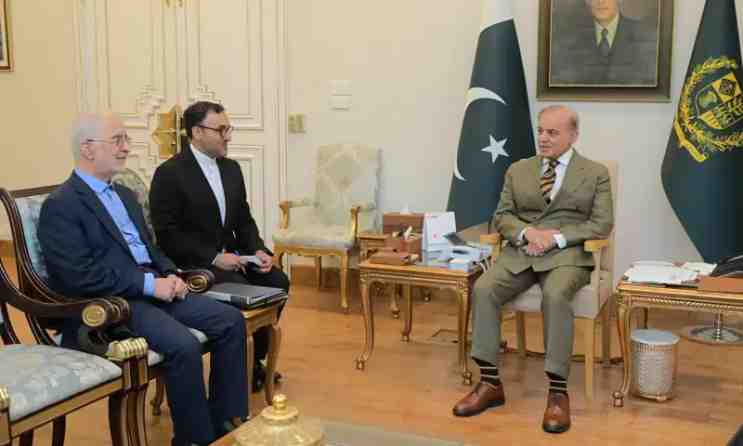
ISLAMABAD (MNN); Iranian Interior Minister Eskandar Momeni held a high-level meeting with Prime Minister Shehbaz Sharif at the Prime Minister’s House in Islamabad on Tuesday as Pakistan intensified its diplomatic engagement aimed at easing escalating tensions in the Middle East.
According to the Prime Minister’s Office (PMO), the meeting took place shortly after Momeni’s arrival at the PM House. While no official details of the discussions were immediately released, the visit is being viewed as significant amid the worsening security situation in the region.
Momeni arrived in Islamabad late Monday on a two-day official visit, leading a high-level Iranian delegation. He was received at the airport by Federal Interior Minister Mohsin Naqvi.
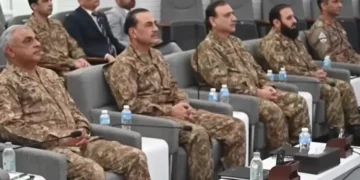
During his stay, the Iranian minister is also expected to meet Chief of Defence Forces and Chief of Army Staff Field Marshal Syed Asim Munir to discuss bilateral security cooperation, border management and the evolving regional security environment.
Earlier on Tuesday, Islamabad Police presented a ceremonial parade in honour of the visiting dignitary. Minister of State for Interior Tallal Chaudhry accompanied Momeni during the ceremony and later escorted him to the Pakistan Monument, where a contingent of the Federal Constabulary presented a guard of honour.
The visit comes at a critical time as Pakistan continues diplomatic efforts to revive the Islamabad Memorandum of Understanding (MoU) signed last month between the United States and Iran, which had aimed to establish a ceasefire following months of military confrontation.
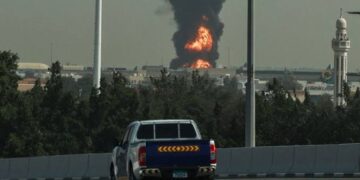
However, the agreement has effectively collapsed after renewed hostilities between Washington and Tehran. According to recent developments, US forces continued military strikes inside Iran for the tenth consecutive day late Monday, while Iran responded on Tuesday by targeting US radar and air defence installations in the Gulf region.
The latest escalation follows US President Donald Trump’s statement earlier this month declaring the ceasefire “over.” Iranian President Masoud Pezeshkian has since described the conflict as a “full-scale war,” accusing Washington of violating the Islamabad peace agreement.
Despite ongoing military exchanges, Iranian Foreign Ministry spokesman Esmaeil Baqaei has confirmed that indirect diplomatic contacts between Tehran and Washington remain active through international mediators, including Pakistan.
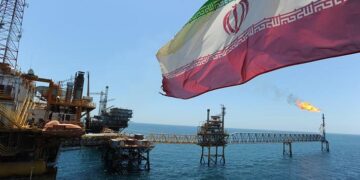
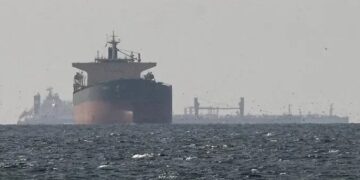
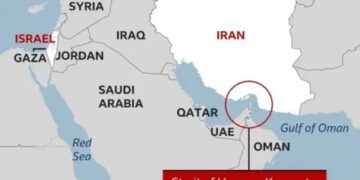
The deteriorating situation has also intensified tensions in regional waterways. Iran has reinstated its blockade of the Strait of Hormuz following the collapse of the ceasefire, while the United States has reportedly tightened restrictions on Iranian ports.
Meanwhile, Yemen’s Houthi movement has widened the regional conflict by announcing an immediate maritime embargo on Saudi Arabia. Houthi military spokesman Yahya Saree said the move was a retaliatory response, describing it as an “eye-for-an-eye” measure.
Saudi Arabia strongly condemned the Houthi announcement, with the Saudi Foreign Ministry reaffirming its support for Yemen’s internationally recognised government based in Aden and rejecting attempts to threaten maritime security in the region.
Pakistan has consistently called for dialogue and diplomatic engagement to prevent further escalation, while maintaining close contact with all regional stakeholders in an effort to promote peace and stability.