


























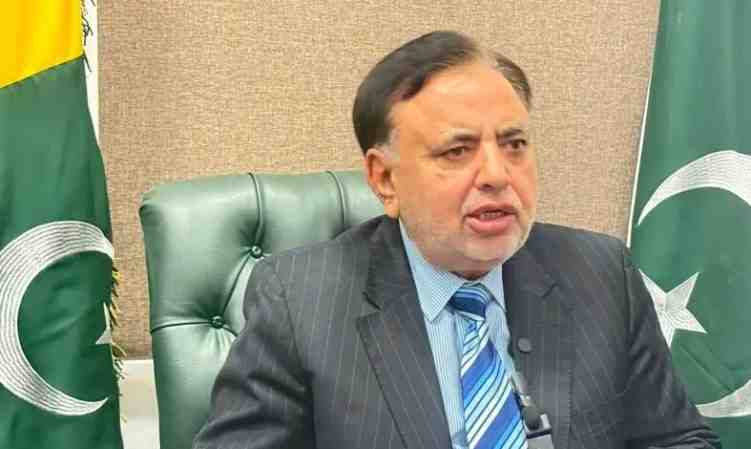
MUZAFFARABAD (MNN); The Azad Jammu and Kashmir (AJK) Election Commission has revised the schedule for the upcoming Legislative Assembly elections, announcing that polling will now be conducted in three phases instead of a single day. The electoral process, originally scheduled for July 27, will conclude on August 10 to facilitate enhanced security arrangements across the region.
Addressing a press conference on Tuesday, AJK Chief Election Commissioner Justice (retd) Ghulam Mustafa Mughal said the decision was taken after consultations with all participating political parties, which strongly recommended the deployment of Pakistan Army personnel to ensure peaceful, transparent and credible elections.
Under the revised schedule:
- July 27: Polling in all 13 constituencies of Mirpur Division
- August 2: Polling in 9 constituencies of Muzaffarabad Division along with 12 refugee constituencies
- August 10: Polling in 11 constituencies of Poonch Division
The Chief Election Commissioner said the phased schedule would allow army contingents to move from one division to another, ensuring adequate security at every polling station.
Justice Mughal said the prevailing security environment in Pakistan, particularly in Balochistan, Khyber Pakhtunkhwa and parts of AJK, made additional security arrangements essential. He noted that political parties had expressed reservations about holding elections without military deployment and unanimously supported the revised election programme.
He added that the Election Commission had coordinated with all stakeholders to ensure sufficient troop availability despite the army’s commitments in different parts of the country.
The CEC clarified that although formal meetings with political parties could not be held because election material had already been dispatched for Mirpur Division, all parties were consulted by telephone and endorsed the amendments.
Responding to concerns regarding the phased polling process, Justice Mughal rejected suggestions that it would affect election fairness or influence voters in later phases. He maintained that voters remain committed to their preferred political parties and that the revised schedule would instead strengthen transparency and security.
He also stated that polling agents would receive Form-24 from presiding officers immediately after vote counting, allowing unofficial results to be available on polling day. The Election Commission is considering whether official notifications of successful candidates will be issued division-wise or after the completion of polling across all constituencies.
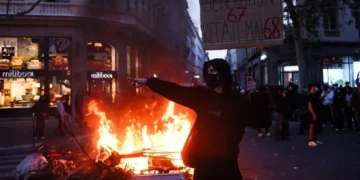
Referring to the recent protests and clashes in Poonch Division, the CEC ruled out postponing elections in the area, saying the Commission was constitutionally bound to complete the electoral process regardless of the prevailing situation.
Justice Mughal expressed confidence that the security situation would improve before polling while reaffirming that elections would proceed even if challenges persisted.
The Election Commission has also reiterated its invitation to domestic and international election observers, including observers from Pakistan, to monitor the electoral process.
The amendment to the election schedule has been made under Section 37 of the Jammu and Kashmir Elections Act, 2020, which authorises the Election Commission to modify the election programme whenever necessary.
Election Campaign Intensifies
Meanwhile, political activity has accelerated across Azad Kashmir, with both the Pakistan Peoples Party (PPP) and the Pakistan Muslim League-Nawaz (PML-N) intensifying their campaigns ahead of polling.
Political observers view the contest as primarily a battle between PPP and PML-N. The PPP is contesting the elections in alliance with Jamiat Ulema-e-Islam-Fazl (JUI-F), while PML-N faces criticism from some quarters over its alleged role in the government’s handling of protests by the banned Jammu Kashmir Joint Awami Action Committee (JAAC).
The controversy surrounding the 12 refugee seats reserved for migrants from Indian Illegally Occupied Jammu and Kashmir (IIOJK) remains one of the key election issues. JAAC has demanded the abolition of these reserved seats, leading to widespread protests and confrontations with authorities in recent weeks.
Former Prime Minister Raja Pervez Ashraf has maintained that the refugee seats are a constitutional matter that should be decided by the newly elected AJK Legislative Assembly.