
















































ISLAMABAD (MNN); A high-level committee has proposed a major overhaul of Islamabad’s governance system, recommending the establishment of an elected 27-member assembly, a chief executive and 27 administrative departments for the federal capital.
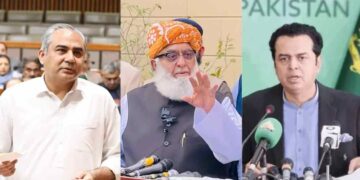
According to official sources quoted by Geo News, the proposed framework has been prepared by a committee headed by Planning Minister Ahsan Iqbal. The committee also includes Federal Ministers Tariq Fazal Chaudhry, Musadik Malik and Rana Sanaullah, Minister of State Talal Chaudhry, Islamabad’s members of the National Assembly and the Interior Secretary.
The proposal recommends the creation of a formal Islamabad Capital Territory Government with its own elected legislature and greater administrative and financial authority.
Under the draft plan, the Islamabad Capital Territory Assembly would consist of 27 members, including 21 directly elected representatives, five reserved seats for women and one seat for minorities.
The proposed electoral arrangement would provide seven assembly constituencies corresponding to each National Assembly constituency in Islamabad.
The Election Commission of Pakistan would conduct elections for the proposed assembly, while all elected members would be required to meet the constitutional requirements laid down under Articles 62 and 63.
The assembly would elect its own leader, who could be designated as either the chief minister or mayor. The elected leader would serve as the Chief Executive of the Islamabad Capital Territory Government and would be accountable to the assembly.
Proposed Administrative Structure
The new governance model proposes the establishment of 27 administrative departments under the Islamabad Capital Territory Government.
Major sectors, including health, education, environmental protection, municipal services and local government affairs, would fall under the authority of the elected ICT government.
However, law and order and Islamabad’s master planning are proposed to remain under federal control. These functions would be exercised through the relevant federal minister or a governor appointed for the Islamabad Capital Territory.
The proposal also recommends transferring all functions of the Capital Development Authority to the new Islamabad government, except those related to the city’s master plan.
Under the proposed structure, Union Councils would serve as the only tier of local government and would work in coordination with the Local Government Department of the ICT Government.
The current administrative structure would also undergo changes. The Chief Commissioner would be redesignated as the Chief Secretary, while four secretaries would oversee groups of administrative departments.
The departments dealing with law and order and master planning would continue to report to the federal minister or ICT governor through the Chief Secretary.
New Law Instead of Constitutional Amendment
According to sources, the proposed governance system would be introduced through an Act of Parliament rather than through a constitutional amendment.
The proposed legislation is expected to be titled the Islamabad Capital Territory Government Act 2026.
The new law would bring together and replace provisions currently contained in the ICT Local Government Act 2015 and the Capital Development Authority Ordinance 1960, creating a single and unified legal framework for governing the federal capital.
The draft plan is expected to be presented before the federal cabinet for approval. After cabinet approval, the proposed legislation would be introduced in both the National Assembly and the Senate.
Following approval of the initial framework, a legislative committee comprising the Law Minister, an Islamabad MNA, the Law Secretary, Interior Secretary, CDA Chairman and other co-opted members would prepare the detailed legislation.
Under the proposed model, the Islamabad Capital Territory Government would enjoy administrative and financial autonomy similar to that of a provincial government.
All existing and future government institutions operating in Islamabad would function throughout the entire territory, including both urban and rural areas, rather than being restricted to the capital’s urban zones.
The proposed plan represents one of the most significant attempts to restructure Islamabad’s administrative system and could make the federal capital the first major test case for the creation of new administrative units.
The proposal has reportedly been presented to Prime Minister Shehbaz Sharif, raising the possibility that Islamabad residents may eventually have their own elected assembly and a more directly accountable system of governance.