

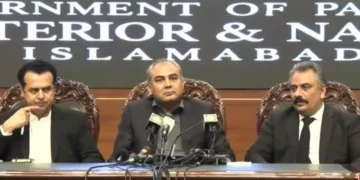









































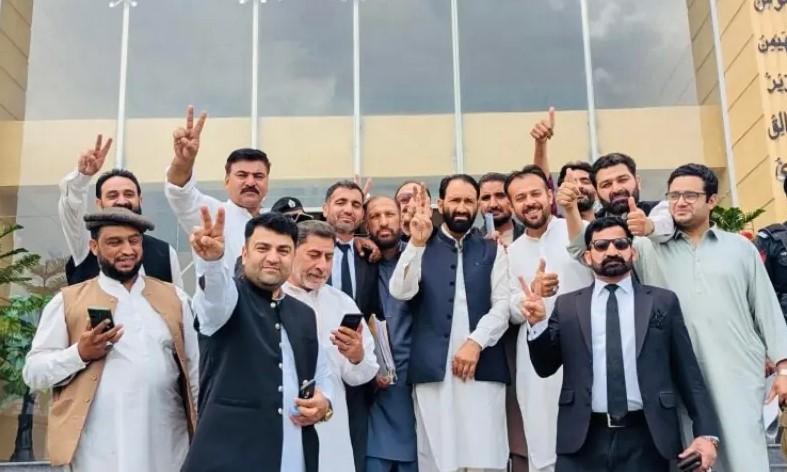
GILGIT (MNN); The Gilgit-Baltistan Chief Election Commissioner, Raja Shahbaz Khan, on Wednesday announced verdicts on three pending election petitions, resulting in the Pakistan Peoples Party (PPP) securing 11 seats in the Gilgit-Baltistan Assembly.
Under the decisions, PPP candidate Attaullah Khan was declared victorious from GBA-16 Diamer-II, while Pakistan Muslim League-Nawaz (PML-N) candidates Malik Kefayat and another party nominee were declared winners from GBA-17 and GBA-13 Astore-I, respectively.
The petitions had been filed by rival candidates challenging the Form-47 results. Following hearings and arguments from all parties, the Election Commission had suspended the results and reserved its judgments before issuing the final decisions.
With the latest outcomes, the PPP has emerged as the largest party with 11 seats. PML-N has secured six seats, while four independent candidates who recently joined the Istehkam-e-Pakistan Party (IPP) have won seats. PTI-backed candidates secured two seats, and Majlis Wahdat-i-Muslimeen won one seat.
The Chief Election Commissioner said official notifications of the successful candidates would now be issued. He added that six reserved seats for women and three technocrat seats would be allocated among political parties according to their final strength in the assembly after formal notifications.
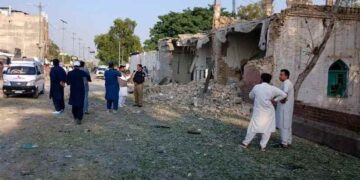
The election results have remained controversial in some constituencies. Supporters of independent candidate Imam Malik in GBA-16 had staged protests by blocking the Karakoram Highway in Chilas and demanding re-polling at selected polling stations.
Earlier, the Election Commission had ordered re-polling at three polling stations in GBA-16 before later withdrawing the decision. It had also delayed the announcement of results for GBA-13 Astore-I and GBA-16 Diamer-II until June 17.
According to the Election Commission, the June 7 Gilgit-Baltistan Assembly elections recorded a voter turnout of 70 percent, which election authorities described as a strong indicator of public confidence in the democratic process.
However, the Human Rights Commission of Pakistan has voiced serious concerns over the Election Commission’s decision to suspend re-polling in several constituencies shortly after ordering it and then proceed with the declaration of final results.
In a statement, the rights body said the initial re-polling orders had prompted allegations from opposition parties and candidates that recounting and related procedures could potentially influence election outcomes and affect government formation.
The commission warned that sudden reversals of electoral decisions risk strengthening perceptions of political interference and could undermine public trust in both the electoral process and election administration.