































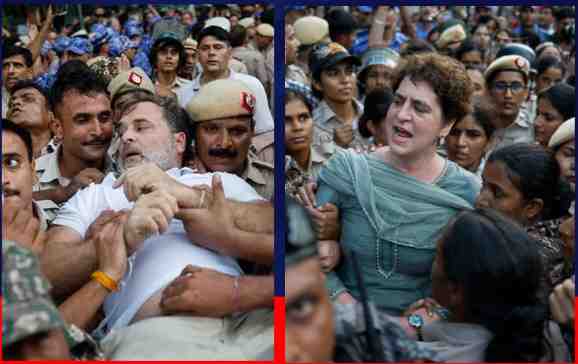
NEW DELHI (MNN); Indian opposition leader Rahul Gandhi, Congress MP Priyanka Gandhi Vadra, and Samajwadi Party chief Akhilesh Yadav were detained by Delhi Police on Tuesday during a protest march towards Prime Minister Narendra Modi’s residence, as opposition parties intensified pressure on the government over its handling of nationwide student demonstrations demanding education reforms.
According to Indian media reports, Rahul Gandhi was leading a group of opposition Members of Parliament towards the Prime Minister’s residence in New Delhi when police intercepted the march and detained several senior opposition leaders.
In a statement posted on social media before his detention, Rahul Gandhi called on Prime Minister Narendra Modi to resign, accusing his government of “destroying the future of India’s youth” through its response to student protests.
Speaking after the incident, the Leader of the Opposition in the Lok Sabha alleged that the government was unwilling to accept responsibility for the violence or allow a parliamentary debate on the issue.
During the police action, television footage showed Rahul Gandhi resisting detention while security personnel attempted to escort him away. Reports said he sustained minor injuries during the scuffle.
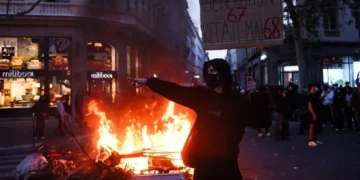
The political confrontation follows violent clashes between protesters and security forces in central New Delhi on Monday, where thousands of students and activists gathered to demand sweeping reforms in India’s examination system and the resignation of Union Education Minister Dharmendra Pradhan.
Delhi Police said at least 178 people were injured during the unrest, including 118 police personnel and around 60 protesters. Authorities accused demonstrators of engaging in violent behaviour, while protest organisers alleged excessive use of force by security agencies.
Police used tear gas shells and baton charges to stop demonstrators from marching towards Parliament in what observers described as one of the largest street protests witnessed in the Indian capital in recent years.
The protests have been spearheaded by the Cockroach Janata Party (CJP) movement, which has rapidly gained popularity on social media since its launch earlier this year. Organisers have vowed to continue demonstrations until the education minister is removed and comprehensive reforms are introduced to India’s examination system.
CJP founder Abhijeet Dipke urged protesters to remain peaceful but determined, saying attempts to suppress the movement would not weaken public resolve.
Meanwhile, CJP leader Ashutosh Ranka strongly criticised the police action, calling it a “dark day for Indian democracy” and accusing authorities of using excessive force against peaceful students.
Hundreds of protesters continued their sit-in at Delhi’s Jantar Mantar on Tuesday, demanding accountability for the police action and reforms aimed at restoring public confidence in the country’s education system.
The unrest also disrupted proceedings in the Indian Parliament, where opposition lawmakers demanded an immediate debate on what they described as police brutality against students, forcing the House to adjourn temporarily.
The demonstrations come against the backdrop of growing public frustration over unemployment and a series of examination controversies.
Last month, more than 2.2 million medical students were required to retake a national entrance examination after the original test was cancelled due to a question paper leak. Another controversy involving the digital evaluation system for examinations taken by nearly two million high school students has further intensified calls for reform.
Political analysts say the education crisis has emerged as one of the biggest domestic challenges facing Prime Minister Narendra Modi’s government since securing a third consecutive term in office.