






































DOHA/TEHRAN/WASHINGTON (MNN); Yemen’s Houthi movement on Monday announced a maritime embargo against Saudi Arabia, significantly escalating regional tensions as the ongoing conflict between the United States and Iran continues to spread across the Middle East.
In a televised statement, Houthi military spokesman Yahya Saree declared an immediate naval blockade against what he described as the “criminal Saudi enemy,” saying the move was based on the principle of “an eye for an eye.” However, the group did not explain how it intends to enforce the embargo.
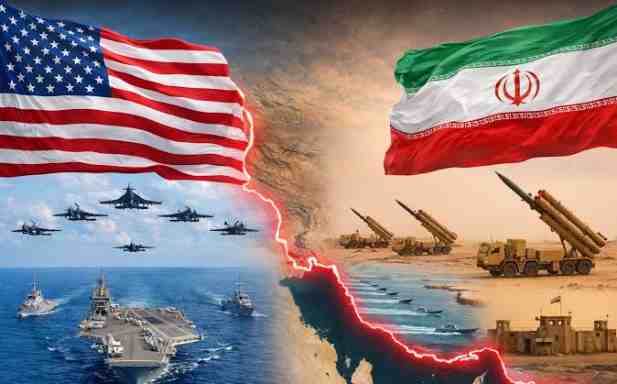
The announcement comes amid intensifying hostilities between Washington and Tehran, with both sides battling for strategic influence over the Strait of Hormuz, one of the world’s most critical energy shipping routes.
The latest development also threatens the fragile ceasefire reached between Saudi Arabia and the Houthis in 2022. The two sides exchanged strikes last week for the first time in several years after tensions flared over an Iranian aircraft attempting to land in the Yemeni capital, Sanaa.
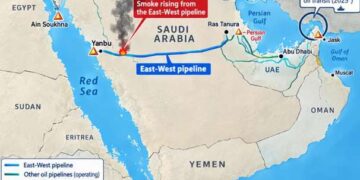
Security analysts warn that if implemented, the Houthi blockade could severely disrupt Saudi Arabia’s oil exports through its Red Sea ports, particularly Yanbu, which has become increasingly important as traffic through the Strait of Hormuz remains restricted.
Any disruption to Saudi exports could have significant global consequences, as the Kingdom produces more than 10 million barrels of crude oil per day, making it one of the world’s largest energy suppliers.
The United Nations also voiced concern over the announcement. UN Secretary-General spokesman Stephane Dujarric warned that simultaneous instability in both the Strait of Hormuz and Bab al-Mandab could trigger an even broader regional conflict and severely affect global shipping and energy markets.
Experts noted that while the Strait of Hormuz is essential for Gulf oil and liquefied natural gas exports, the Bab al-Mandab waterway serves as a key maritime corridor linking Asia, the Gulf region and Europe.
The Houthis have previously targeted commercial vessels in the Red Sea since late 2023, forcing many international shipping companies to reroute around southern Africa, significantly increasing transport costs and delivery times.
Meanwhile, Iranian President Masoud Pezeshkian declared that Iran is now engaged in a “full-scale war” with the United States after Washington expanded military strikes deeper inside Iranian territory.
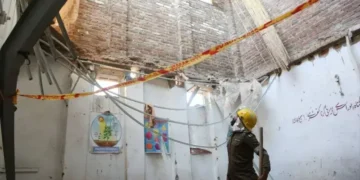
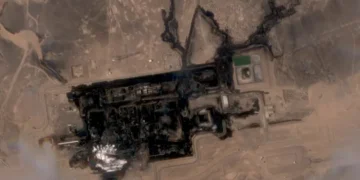
According to Iranian officials, American attacks targeted several provinces, including Bushehr, home to Iran’s only operational civilian nuclear power plant, as well as other locations hosting military installations and air defence systems.
Bushehr Governor Mohammad Mozaffari confirmed that multiple sites in the city were struck by what he described as American projectiles.
In East Azerbaijan province, local authorities reported that one person was killed and several others were injured following fresh strikes.
Iran also continued retaliatory military operations across the region.
The Islamic Revolutionary Guard Corps (IRGC) claimed responsibility for overnight attacks targeting military sites in Syria, Jordan and Kuwait. According to Iranian state media, strikes reportedly targeted facilities in Syria’s Al-Tanf region, military aircraft stationed at Jordan’s Aqaba Airport and an early-warning radar installation in Kuwait.
Kuwaiti authorities confirmed that their air defence systems intercepted hostile drones following what they described as Iranian aggression, while Bahrain activated nationwide air raid sirens and advised residents to seek shelter after reporting threats to its air navigation infrastructure. At sea, the security situation also deteriorated further.
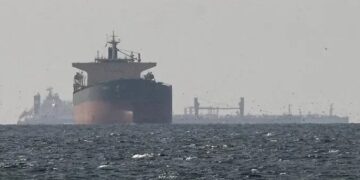
The UK Maritime Trade Operations (UKMTO) agency reported that sailors abandoned a vessel after it caught fire in an attack near the Strait of Hormuz. Earlier, Iran’s Revolutionary Guards claimed that two oil tankers attempting to transit the strategic waterway had been disabled following explosions.
Despite the continuing military escalation, diplomatic efforts have not completely collapsed.
Iranian Foreign Ministry spokesman Esmaeil Baqaei confirmed that indirect contacts with Washington through international mediators remain active, saying several diplomatic proposals had recently been exchanged.
US Secretary of State Marco Rubio reiterated Washington’s commitment to pursuing diplomacy while urging the international community to contribute to protecting global maritime trade routes.
The US Central Command (CENTCOM) announced that American forces had completed a ninth consecutive night of military operations against Iranian targets.
The renewed fighting follows a deadly weekend in which the United States confirmed three additional military fatalities and one missing service member. Two American troops were killed during Iranian missile and drone attacks in Jordan, while another died during explosive ordnance disposal operations in northern Iraq.
President Donald Trump said recent US strikes had “hit them very hard” and described the operations as a response to the deaths of American personnel.
According to Iranian health authorities, at least 50 people have been killed and more than 500 others injured in the latest wave of fighting.
With military operations expanding across multiple countries and vital maritime routes under growing threat, international observers warn that the conflict risks triggering a broader regional crisis with far-reaching consequences for global energy supplies, shipping and financial markets.