




































DOHA/ISLAMABAD (MNN); At least 73 civilians, including women and children, were injured after Yemen’s Houthi group launched drone and missile attacks targeting cities and economic infrastructure in southern Saudi Arabia, Saudi authorities and the Saudi-led military coalition said on Tuesday.
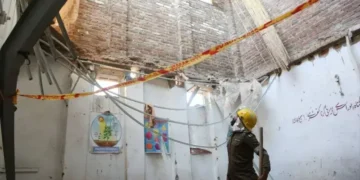
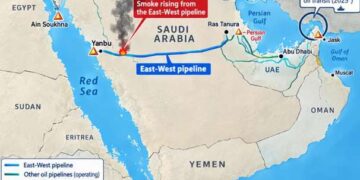
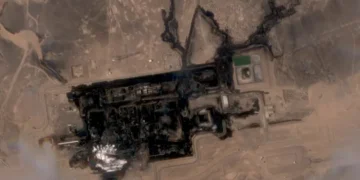
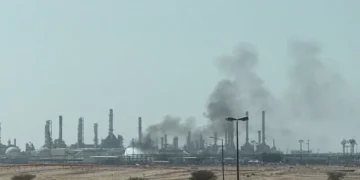
The attacks struck civilian, commercial and energy-related sites in Abha, Khamis Mushait, Jazan and Najran, triggering fires at energy facilities and causing temporary disruptions to some operations.
Coalition spokesperson Major General Turki al-Maliki described the attacks as a “dangerous escalation” and a blatant violation of Saudi Arabia’s sovereignty. He accused the Houthis of deliberately pursuing extremist and criminal actions that threatened peace and stability in Yemen and neighbouring Arab states.
The Saudi Energy Ministry said specialised teams had been deployed to contain the fires and secure the affected facilities.
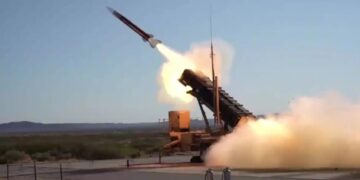
The Houthis said they had carried out a broad operation deep inside Saudi territory, using drones and missiles to target a Saudi airbase in Khamis Mushait and sites linked to Saudi Arabia’s state oil sector in Abha, Najran and Jazan.
The Saudi-led coalition vowed to take all necessary operational measures to deter further attacks, protect civilians and neutralise sources of threats.
The escalation drew strong condemnation from Pakistan, Egypt and other regional countries.
Prime Minister Shehbaz Sharif denounced the Houthi attacks on Saudi Arabia’s civilian and energy infrastructure, describing them as cowardly attacks that endangered innocent lives and threatened regional peace and security.
In a statement, the Prime Minister reaffirmed Pakistan’s unwavering support for Custodian of the Two Holy Mosques King Salman bin Abdulaziz, Crown Prince Mohammed bin Salman and the people of Saudi Arabia.
He said Pakistan stood firmly behind the Kingdom’s sovereignty, security and territorial integrity and prayed for the speedy recovery of those injured.
Pakistan’s Foreign Office also condemned the attacks in the strongest terms, describing the strikes on civilian and economic targets in Abha, Khamis Mushait, Jazan and Najran as a flagrant violation of Saudi Arabia’s sovereignty and territorial integrity.
The Foreign Office said the attacks posed a serious threat to regional peace and stability and undermined efforts aimed at achieving a peaceful and durable settlement of the conflict in Yemen.
Pakistan reaffirmed Saudi Arabia’s legitimate right, in accordance with the UN Charter and international law, to take necessary measures to defend its territory, protect its citizens and residents and safeguard its national assets.
Egypt also strongly condemned the missile and drone attacks, calling them a dangerous escalation and a threat to the security and safety of Saudi citizens.
Cairo reaffirmed its support for Riyadh in confronting threats to its security, sovereignty and territorial integrity, stressing that the security of Saudi Arabia was an integral part of Egyptian and Arab national security.
Meanwhile, the escalation in Saudi Arabia came as violence intensified inside Yemen.
Two children were killed and 15 people, including eight children, were injured after shelling targeted a gathering of displaced people in the Raghwan district of Yemen’s central Marib province, local authorities said.
According to the government-run local authority, several projectiles struck the gathering on Monday evening, causing extensive damage to homes and property belonging to displaced families.
Around 16 shelters were destroyed, leaving 23 families without accommodation and basic belongings, while three vehicles were also damaged.
The Houthi group did not immediately comment on the allegations.
Marib hosts more than 2.2 million displaced people, according to Yemeni government estimates, out of around five million displaced people across the country.
The internationally recognised Yemeni government, meanwhile, announced that a decision had been made to retake the capital Sanaa from the Houthis.
Deputy Defence Minister Major General Samir Al-Sabri said the government had decided to launch efforts to recapture Sanaa, while army spokesperson Majid al-Nuzaili said the objective was to liberate Yemen from Houthi control and restore Sanaa as the capital for all Yemenis.
The latest violence follows the collapse of a period of relative calm in Yemen and comes amid wider military and economic tensions across the Gulf.
The International Organisation for Migration said more than 18,500 people had fled their homes because of fighting along Yemen’s west coast over the past three days.
Regional tensions have also been fuelled by the continuing confrontation between the United States and Iran.
Iranian security official Mohsen Rezaei warned that continued US “economic warfare” against Tehran could prompt Iran to establish a maritime exclusion zone across the Persian Gulf.
Rezaei said Iran had fundamentally recalibrated its operational posture towards US warships and military bases.
The warning has added to concerns over the security of the Strait of Hormuz, a major global energy shipping route.
Shipping traffic through the Strait slowed at the start of the week following Iranian threats of retaliation against any new US attacks. Data showed only seven commodity vessels passing through the Strait on Monday, compared with eight a day earlier.
Qatar has called for a phased de-escalation of the US-Iran conflict and urged regional powers to create conditions for comprehensive negotiations.
Qatari Foreign Ministry spokesperson Majed al-Ansari said Doha did not believe the crisis could simply be frozen through a temporary halt in fighting, warning that such an approach could lead to renewed escalation.
He said Qatar’s immediate priorities were to keep the Strait of Hormuz open, reduce economic pressure on regional populations and prevent further military escalation.
Al-Ansari stressed that a sustainable solution would ultimately require comprehensive dialogue involving regional countries.
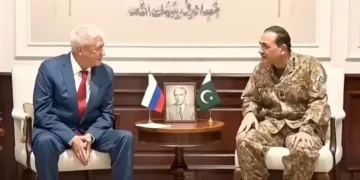
Russian Foreign Minister Sergei Lavrov, meanwhile, told Saudi Foreign Minister Prince Faisal bin Farhan during talks in Moscow that Russia was ready to assist efforts to resolve the wider Middle East crisis.
Prince Faisal said Saudi Arabia was keen to deepen cooperation with Russia, including within the OPEC+ alliance.
The conflict has also raised concerns over global energy supplies.
US President Donald Trump said oil prices would fall sharply if the United States “wins the war” with Iran, predicting that fuel prices could eventually fall below two dollars per gallon.
However, renewed fighting in the Gulf has pushed oil prices higher, with Brent crude rising by more than two per cent on Tuesday to above $99 a barrel.
Iraq is also exploring ways to shift its oil exports away from the Strait of Hormuz in an effort to protect its main source of revenue from potential disruptions caused by regional conflict.
The Houthi attacks on Saudi energy facilities have heightened fears that the conflict could spread further and disrupt Middle Eastern energy supplies beyond the Strait of Hormuz.
The Saudi-led coalition has been fighting the Houthis in Yemen for more than a decade. Although the conflict had eased in recent years, the breakdown of the ceasefire and renewed military activity have again pushed Yemen and the wider Gulf region towards greater instability.
As tensions continue to rise, the wider confrontation has increasingly become a struggle involving military action, economic pressure and threats to strategic shipping routes, raising fresh concerns about the impact on regional security and global energy markets.