











































By Aslam Dogar
ISLAMABAD/TEHRAN/ANKARA (MNN); Pakistan, Türkiye and Saudi Arabia have moved to operationalise their recently signed Makkah Joint Defence Agreement following a sharp escalation in Houthi attacks against Saudi Arabia, while Islamabad is simultaneously pursuing diplomatic efforts with Tehran to prevent the conflict from spreading across the region.
Pakistan’s Foreign Office on Thursday reaffirmed that Islamabad remains committed to implementing both its bilateral defence agreement with Saudi Arabia and the trilateral Makkah accord. Foreign Office spokesperson Sajjad Haider Khan said the pact would be implemented in its “intent and spirit”, but declined to disclose details of any possible military response, citing operational confidentiality.
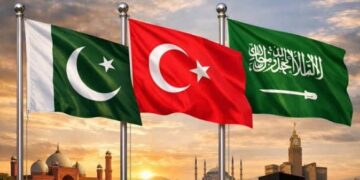
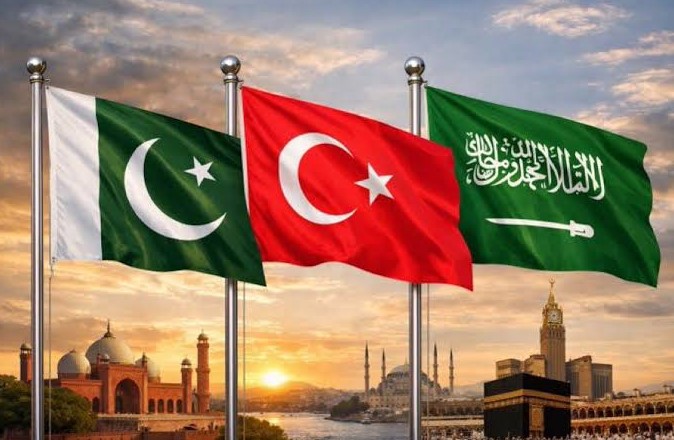
The Makkah agreement, signed by Pakistan, Saudi Arabia and Türkiye last month, provides a framework for enhanced defence cooperation and stipulates that an armed attack against one member is to be regarded as an attack against all three. Pakistani officials have stressed that the agreement is defensive in nature and is not formally directed against any particular country.
Khawaja Asif: Time Has Come to Implement Pact
Pakistan’s Defence Minister Khawaja Asif said the recent Houthi attacks had created circumstances in which the Makkah agreement should now be implemented.
Speaking to Geo News, Asif said Pakistan remained committed to protecting Saudi Arabia and its holy sites, adding that Islamabad considered this responsibility important even apart from the defence agreement.
He said Pakistan had conveyed Saudi Arabia’s concerns to Iran regarding attacks attributed by Riyadh to the Houthis. Asif also said he did not believe Iran, as a state, would seek to open another front while it was already engaged in a wider regional conflict. He reiterated Pakistan’s efforts to prevent the conflict from expanding.
Pakistan Urges Iran to Use Influence Over Houthis
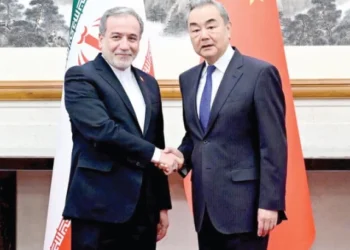
In a separate diplomatic effort, Chief of Defence Forces and Chief of Army Staff Field Marshal Asim Munir spoke by telephone with Iranian Foreign Minister Abbas Araghchi during the latter’s visit to Beijing.
According to Pakistani officials, Munir urged Tehran to use its influence to persuade the Houthis to stop attacks against Saudi Arabia’s energy facilities and economic infrastructure.
The discussion covered the broader regional security situation, the recent Houthi attacks and efforts to revive stalled direct negotiations between the United States and Iran.
Iranian state media confirmed the call, describing it as a discussion on regional developments and issues of mutual interest. Araghchi also held a separate telephone conversation with Turkish Foreign Minister Hakan Fidan on regional developments.
Iranian officials have previously said Tehran does not control the Houthis and regards the Yemeni group as an independent actor. That position remains an important element in Islamabad’s diplomatic efforts.
Türkiye’s Intelligence Chief Holds Talks in Islamabad
The diplomatic and security contacts coincided with a visit to Islamabad by Türkiye’s National Intelligence Organization chief Ibrahim Kalin, who travelled to Pakistan after visiting Afghanistan.
Kalin met Field Marshal Asim Munir, Inter-Services Intelligence chief Lt Gen Asim Malik, and Prime Minister Shehbaz Sharif.
According to Turkish security sources, the discussions covered Pakistan-Türkiye relations, bilateral cooperation, regional security and the wider Middle East crisis, including the political, security and economic consequences of the US-Israel war with Iran.
The officials also assessed the possibility of the conflict spreading to additional countries and discussed recent developments between Yemen and Saudi Arabia. The importance of the Makkah defence agreement as a framework for cooperation and regional stability was also highlighted.
Drone Incidents Raise Regional Tensions
The renewed diplomatic activity followed a series of attacks and interceptions involving Saudi Arabia.
Saudi authorities said their air defences intercepted a drone near Makkah earlier this week before it entered restricted airspace over the holy city. The Houthis have denied targeting Makkah and rejected Saudi accusations concerning the incident.
On Thursday, debris from another intercepted drone fell in Taif, killing a Yemeni resident and injuring a Saudi woman and a Pakistani resident. Saudi Civil Defence said the Pakistani national was in critical condition and that civilian buildings and vehicles were damaged.
The Houthis have claimed attacks on Saudi targets, while Saudi Arabia has continued intercepting drones amid the escalating confrontation. The developments have added pressure on Riyadh and its regional partners while also raising concerns about the security of energy infrastructure and shipping routes.
Pakistan Reiterates Support for Saudi Sovereignty
The Foreign Office said Pakistan stood “unwaveringly, shoulder to shoulder” with Saudi Arabia in defending its sovereignty and territorial integrity.
At the same time, Islamabad has called for restraint and a diplomatic solution. The Foreign Office described the situation around the Bab al-Mandab Strait as exceptionally serious and urged the Houthis to halt their activities.
Pakistan has said its approach remains focused on peace and stability through dialogue and diplomacy rather than coercive measures.
Efforts to Revive US-Iran Talks
Munir and Araghchi also discussed efforts to revive stalled direct negotiations between Washington and Tehran.
Pakistan has maintained contacts with both sides during the wider conflict and has sought to facilitate dialogue. China is also pressing for restraint and a return to negotiations, with Chinese Foreign Minister Wang Yi urging Iran and the United States to return to the Islamabad memorandum and engage in substantive consultations.
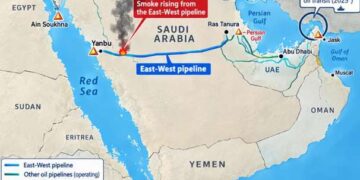
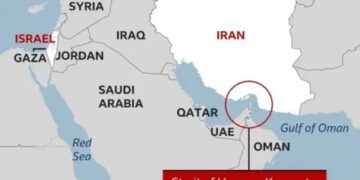
The developments come as the wider conflict continues to affect the Strait of Hormuz, Bab al-Mandab and global energy markets. Saudi Arabia is particularly exposed because both routes have become increasingly important to its oil-export infrastructure amid disruptions elsewhere.
The immediate focus for Pakistan, Türkiye and Saudi Arabia is therefore twofold: implementing the defence framework agreed in Makkah while keeping diplomatic channels open to prevent the Saudi-Yemen confrontation from widening into an even broader regional conflict.