












































MANILA (MNN); A powerful 7.8-magnitude earthquake struck the southern Philippines on Monday, killing at least 31 people, injuring more than 130, and causing widespread destruction across several provinces. The quake also triggered tsunami warnings across parts of the Pacific region before authorities later lifted the alerts.
According to Philippine disaster management authorities, at least 12 people remain missing while 134 others have been injured. The earthquake struck offshore south of General Santos City, home to around 720,000 residents, where at least nine deaths were reported.
The United States Geological Survey (USGS) recorded a series of strong aftershocks beginning about two hours after the initial tremor. The strongest aftershock measured 6.5 in magnitude, while Philippine seismologists reported at least nine significant aftershocks across Mindanao, including one measuring 6.7.
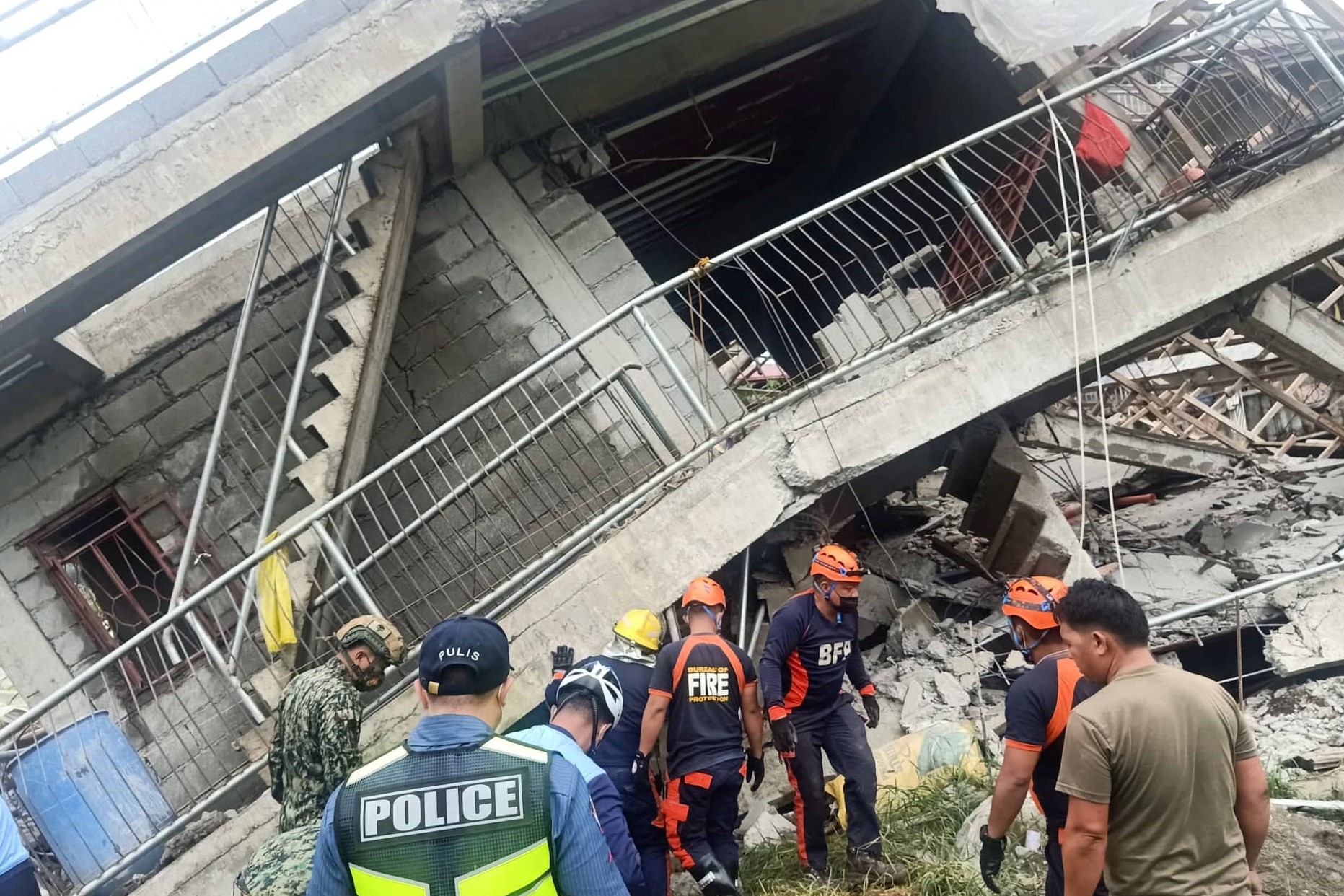
Rescue operations continued throughout the day in affected areas. In General Santos City, emergency workers searched through the rubble of a major grocery store after two employees were trapped beneath the collapsed structure.
The hardest-hit area was Sarangani Province, where disaster management chief Rene Punzalan said 14 people were killed in Glan municipality after a landslide buried homes located at the foot of a mountain.
“The landslide occurred immediately after the earthquake, resulting in significant loss of life,” Punzalan said, adding that communication challenges and widespread power outages were delaying the assessment of casualties and damage in several remote areas.
Authorities expressed concern over continuing aftershocks, which have heightened fear among residents and complicated rescue efforts.
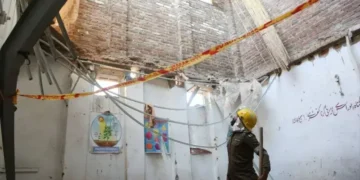
Videos circulating on social media and verified by international media showed extensive damage across the region. In General Santos City, a shopping complex housing a Jollibee restaurant was reduced to rubble, while an abandoned school building collapsed entirely.
Another video showed young schoolchildren screaming and clinging to their teachers as the ground shook violently beneath them. A temporary metal structure near the school later collapsed, though school officials confirmed no one was injured in that incident.
More than 2,000 residents who had evacuated coastal areas following tsunami warnings remained in temporary shelters awaiting official clearance to return home.
The Pacific Tsunami Warning Center initially warned of possible tsunami waves along the coastlines of the Philippines, Indonesia, Palau, Taiwan, and Papua New Guinea. However, by Monday afternoon, tsunami warnings and advisories had been cancelled after the threat subsided.
In Japan, where authorities had also issued a tsunami advisory, waves reaching the Pacific coastline were reported to be less than 20 centimeters high.
Philippine President Ferdinand Marcos Jr. ordered an immediate nationwide disaster response across Mindanao, directing government agencies to mobilize relief supplies, establish evacuation centers, and prepare for potential large-scale rescue operations.
“The national government is moving and we will not leave Mindanao behind,” Marcos said in an official statement.
The president also suspended classes across Mindanao on what was scheduled to be the first day of the new school year and urged residents in coastal communities to move to higher ground immediately.
“Your life is more important than anything left behind,” he said.
Meanwhile, authorities announced the closure of General Santos Airport until further notice after parts of the terminal sustained damage. Video footage showed sections of the airport ceiling collapsing into the baggage claim area.
Hospitals and educational institutions also suffered damage. One hospital in General Santos was evacuated due to concerns over structural cracks in upper floors, while a building at Notre Dame of Dadiangas University collapsed. Fortunately, no one was inside at the time.
University President Manuel de Leon described the earthquake as unusually prolonged and intense.
“I had to take cover under a table. It was extremely strong and lasted a long time,” he said.
Images released by authorities in Sarangani showed collapsed storefront signs, shattered windows, damaged buildings, and debris scattered across roads and communities.
The Philippine military confirmed that disaster response teams had been deployed to assist local authorities in rescue and relief operations.
In Alabel town, police chief Benjie Ancheta said the earthquake struck during a police flag-raising ceremony, causing panic and several people to faint.
“This is the strongest earthquake we have ever experienced,” he said.
The earthquake occurred eight months after the Philippines suffered its deadliest tremor in more than a decade, when a 6.9-magnitude earthquake near Cebu claimed 79 lives. Two additional major earthquakes struck Mindanao shortly afterward, including one measuring 7.4 magnitude.
The Philippines sits along the seismically active Pacific Ring of Fire, making it one of the world’s most earthquake-prone countries. Hundreds of earthquakes are recorded in the region every year.
Meanwhile, Malaysian Prime Minister Anwar Ibrahim expressed solidarity with the Philippines and offered assistance.
“I pray for the safety and well-being of all those affected and wish them strength and courage in the difficult days ahead,” Anwar said in a message posted on social media.