









































TEHRAN/ISLAMABAD/WASHINGTON (MNN); Iran has claimed that its armed forces inflicted serious damage on US military assets during the ongoing conflict, while newly released US government figures and photographs indicate substantial losses to American equipment, military infrastructure, ammunition stocks and personnel.
Deputy Chief of Staff of Iran’s Armed Forces Brigadier General Kioumars Heydari said Iranian forces had emerged victorious on the battlefield by preventing the United States and its allies from achieving their stated objectives.
“Today, there is no doubt that our armed forces are victorious on the battlefield,” Heydari said, adding that the US was now responding to Iranian actions rather than maintaining the initiative.
The claims could not be independently verified in full. In particular, US Central Command has said that Iranian missile attacks against two US Navy warships in September were unsuccessful and that the ships evaded the attacks without casualties.
Iran Says US Facing Military and Strategic Challenges
Iranian Army spokesman Brigadier General Mohammad Akraminia, according to IRNA, said the conflict had demonstrated what he described as limitations in US military capabilities and international influence.
He argued that the international system was moving toward greater multipolarity, with countries seeking greater independence in pursuing their security and national interests.
Iranian officials have repeatedly presented the conflict as evidence of a changing global balance of power. These are Tehran’s political and military assessments and remain contested by Washington.
IRGC spokesman Brigadier General Hossein Mohebbi also rejected US accounts concerning the rescue of an American pilot, accusing Washington of presenting what he called “Hollywood-style narratives.” He claimed images circulated by Iran showed wreckage associated with an American F-15 fighter being removed after an incident.
The US accounts of individual aircraft losses and rescue operations differ from the Iranian narrative.
US Military Losses Mount as War Costs Reach Tens of Billions
Independent US government reporting provides a clearer picture of the material and financial costs incurred by Washington.
A US Department of Defense Inspector General report said that Operation Epic Fury cost the Pentagon an estimated $33.4 billion through June 30, including $22.3 billion in munitions expenditure, $3.7 billion in lost equipment and about $7.4 billion in additional operating costs. The equipment-loss figure includes damage to or loss of nearly 60 aircraft, according to reporting based on the watchdog’s findings.
The inspector general also warned that the enormous expenditure on munitions had produced strategic inventory shortfalls and exposed bottlenecks in the US defence-industrial base that could complicate the replenishment of weapons stocks.
The estimate of $33.4 billion does not include the cost of repairing US military bases damaged by Iranian attacks, meaning the eventual bill could be higher.
Separately, the Congressional Budget Office (CBO) has estimated the overall cost of the conflict at roughly $38 billion, with expenses potentially increasing by about $2 billion to $3 billion per month if the war continues. The CBO also warned about depleted stocks of missile interceptors and other precision weapons.
US Bases Hit Across the Middle East
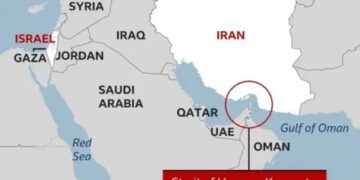
The Pentagon watchdog said US Central Command had reported Iranian attacks against American positions in:
- Kuwait
- Bahrain
- Qatar
- United Arab Emirates
- Saudi Arabia
- Iraq
- Oman
- Jordan
New photographs obtained by CBS News show damage to buildings, vehicles, aircraft and other infrastructure at several of these installations.
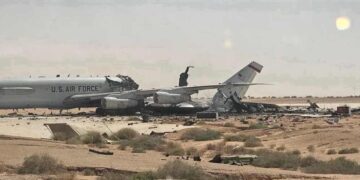
At Prince Sultan Air Base in Saudi Arabia, photographs show what CBS described as a direct hit on the rear portion of a US E-3 Sentry airborne early-warning aircraft, with its tail separated from the charred fuselage. Other images showed damaged buildings and barracks.
At Camp Buehring and Camp Arifjan in Kuwait, photographs reportedly show destroyed vehicles, damaged buildings and burned trailers following Iranian attacks.
Earlier CBS reporting also documented damage to several US aircraft at Muwaffaq Salti Air Base in Jordan.
The Pentagon did not immediately respond to CBS News’ request for comment on the newly released photographs.
US Military Casualties
The human cost has also risen. US officials have reported 18 American service members killed and more than 750 wounded since the conflict began, according to Reuters reporting earlier this month.
The casualties include personnel killed in missile and drone attacks on US positions as well as deaths resulting from military accidents during operations.
Defense Department records obtained earlier in the conflict also documented hundreds of US military casualties during the initial phase, including serious injuries from shrapnel, blast effects and head trauma.
Munitions and Readiness Under Pressure
One of the most significant consequences for the United States has been the expenditure of advanced ammunition.
The Pentagon inspector general said the $22.3 billion spent on munitions during the first four months had contributed to strategic shortages and revealed production bottlenecks.
The CBO has separately warned that replenishing depleted missile-defence inventories could take years and require substantial additional funding. The continuing conflict is therefore generating not only battlefield losses but also longer-term questions about the pace at which the US can rebuild its stocks of interceptors and precision weapons.
Iran Claims Damage to US Warships
Iranian military officials have repeatedly claimed that American naval forces also suffered significant damage.
However, available US military statements provide a different account. US Central Command said that when Iran launched ballistic missiles toward two US Navy warships in September, including an aircraft carrier and guided-missile destroyer, the vessels successfully evaded the attacks and no US personnel were injured.
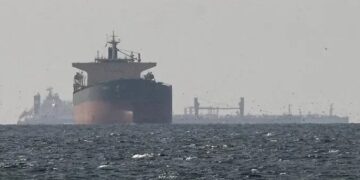
CENTCOM subsequently said US forces destroyed three Iranian oil tankers after the attacks. Iran’s broader claims concerning damage to American warships therefore remain disputed.
China Continues Calls for De-escalation
The latest reports come as diplomatic efforts continue alongside military operations.
China has urged Washington and Tehran to return to negotiations and work toward reopening the Strait of Hormuz, through which a major share of global energy shipments normally passes. Recent shipping data showed traffic through the strait falling sharply, with only four vessel crossings recorded on Tuesday compared with a 10-day average of 18.
The conflict is consequently imposing costs beyond direct military losses, affecting energy supplies, shipping, defence inventories and government budgets.