




















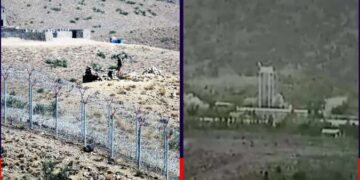


































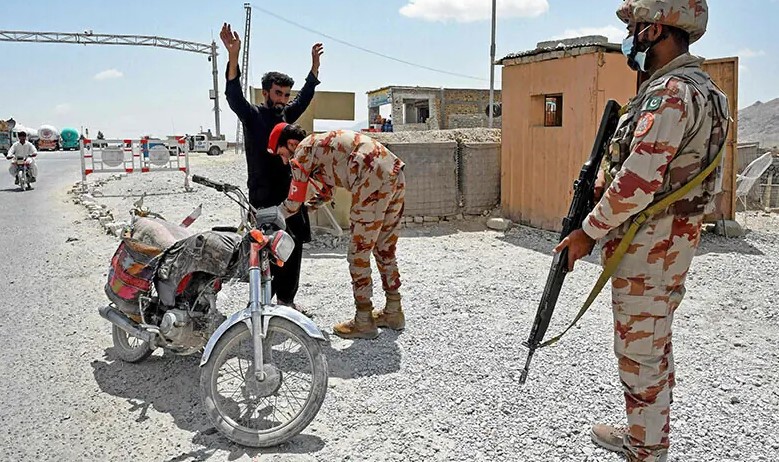
QUETTA (MNN); Pakistan’s security forces have killed 10 terrorists and arrested two female suicide bombers along with their facilitator during a series of intelligence-based counter-terrorism operations conducted over the past 48 hours in the Surab and Mastung districts of Balochistan, the military’s media wing said on Wednesday.
According to the Inter-Services Public Relations (ISPR), seven militants were killed in operations carried out in Surab, while three others were eliminated in Mastung, where security forces also apprehended two female suicide bombers and their alleged facilitator before they could carry out any terrorist activity.
The military said the operations were launched as part of ongoing efforts to dismantle terrorist networks operating in Balochistan and eliminate their remaining hideouts and facilitators.
The ISPR stated that multiple intelligence-based operations (IBOs), targeted raids and area sanitisation missions were conducted during the past two days against militants associated with what the military described as Fitna-al-Hindustan and Fitna-al-Khawarij.
According to the statement, the two arrested female suicide bombers and their facilitator were affiliated with Fitna-al-Hindustan.
Security forces also recovered a cache of weapons, ammunition and improvised explosive devices (IEDs) from the terrorists during the operations.
The military said clearance operations were continuing in the affected areas to ensure that any remaining militants or facilitators were traced and eliminated.
The ISPR reaffirmed that Pakistan’s security forces and law enforcement agencies would continue their nationwide counter-terrorism campaign under the “Azm-i-Istehkam” strategy approved by the Federal Apex Committee under the National Action Plan.
The military reiterated its resolve to eradicate all forms of foreign-sponsored terrorism and maintain peace and stability across the country.
Security Challenges Continue in Balochistan
The latest operations come amid heightened security concerns in Balochistan, where terrorist attacks have increased in recent months.
Earlier this month, security forces and law enforcement agencies launched Operation Shaban following the deadly terrorist attack on a police post at the Mangi Dam pumping station in Ziarat on July 6. During that attack, armed militants abducted and killed 27 police personnel.
A recent security assessment by the Pakistan Institute for Conflict and Security Studies (PICSS) reported a significant rise in terrorist violence during May, particularly in Balochistan and Khyber Pakhtunkhwa.
According to the report, Balochistan recorded 71 terrorist attacks in May compared to 34 attacks in April, representing an increase of more than 100 percent.
The report also highlighted a sharp rise in kidnappings, stating that 52 of the 54 abduction incidents reported nationwide during May occurred in Balochistan.
Earlier this month, Prime Minister Shehbaz Sharif, while chairing a meeting of the Provincial Apex Committee on the National Action Plan in Quetta alongside Chief of Defence Forces and Chief of Army Staff Field Marshal Syed Asim Munir, reaffirmed the government’s commitment to eliminating terrorism through coordinated civil-military efforts.
His remarks followed a press briefing by ISPR Director General Lieutenant General Ahmed Sharif Chaudhry, who linked several recent terrorist attacks in Balochistan—including incidents in Quetta, Ziarat and Bela—to hostile elements operating from outside Pakistan.